A building facade is more than an exterior covering. It is the first impression of a project. It defines how people see the building, how they remember it and how they experience it from the street, entrance, balcony or public space.
For many years, facade design has often depended on flat cladding, painted surfaces, glass or simple exterior panels. While these materials can complete the building envelope, they may not always create a strong architectural identity. A flat surface can easily look plain, repetitive or disconnected from the character of the project.
Modern facades need more.
They need texture, shadow and depth.
These three qualities can transform a building elevation from ordinary to memorable. Texture gives the surface a tactile and visual quality. Shadow adds movement and drama. Depth creates layering, rhythm and dimension. Together, they make the facade feel alive.
This is where architectural elements such as GRC jalis, facade panels, screens, fins, relief surfaces and custom exterior details play an important role. They allow architects and developers to move beyond flat cladding and create facades that are expressive, performance-led and visually distinctive.
Why Flat Cladding Is Not Always Enough
Flat cladding can make a building look clean and finished, but it may not always create a premium or memorable identity. In many commercial and residential projects, flat surfaces can feel too plain, especially when repeated across large elevations.
A flat facade may have colour, but it may lack dimension. It may have material, but it may lack depth. It may cover the building, but it may not communicate design intent.
Modern buildings need facades that do more than protect the structure. They need to:
- Create a strong visual identity
- Respond to light and climate
- Improve building perception
- Add depth and rhythm
- Support privacy and shading
- Connect with the landscape
- Enhance user experience
- Reflect the project’s positioning
Flat cladding alone may not solve all these requirements. This is why layered facade design is becoming more important.
The Role of Texture in Facade Design
Texture is one of the most powerful elements in architecture. Even before someone touches a surface, they can visually feel it. A textured facade can appear warmer, richer and more premium than a plain flat surface.
Texture can be smooth, rough, ribbed, grooved, patterned, stone-like, concrete-like or custom-moulded. It changes the way light interacts with the building and adds detail to the elevation.
In facade design, texture can be created through:
- GRC panels
- Relief surfaces
- Patterned jalis
- Stone-finish elements
- Ribbed architectural panels
- Custom moulded surfaces
- Sandstone or concrete textures
- Terracotta or pigmented finishes
- Decorative facade screens
Texture helps break the monotony of large surfaces. It gives the building a more crafted and intentional appearance.
For example, a plain wall may look simple during the day and disappear visually at night. But a textured GRC panel wall can catch light, create shadow and remain visually interesting from different angles.
Why Shadow Matters in Architecture
Shadow is not an empty space. It is an active design element.
When sunlight hits a flat wall, the surface may appear plain. But when light passes through a jali or falls across a textured panel, it creates patterns, contrast and movement. This makes the building change throughout the day.
Shadow adds drama to facades. It highlights depth. It makes surfaces appear more dynamic. It can also reduce the harshness of direct sunlight and create a more comfortable visual experience.
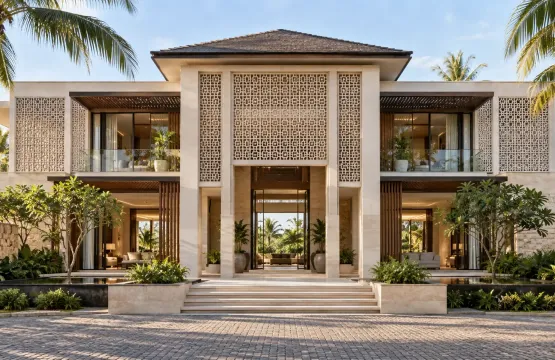
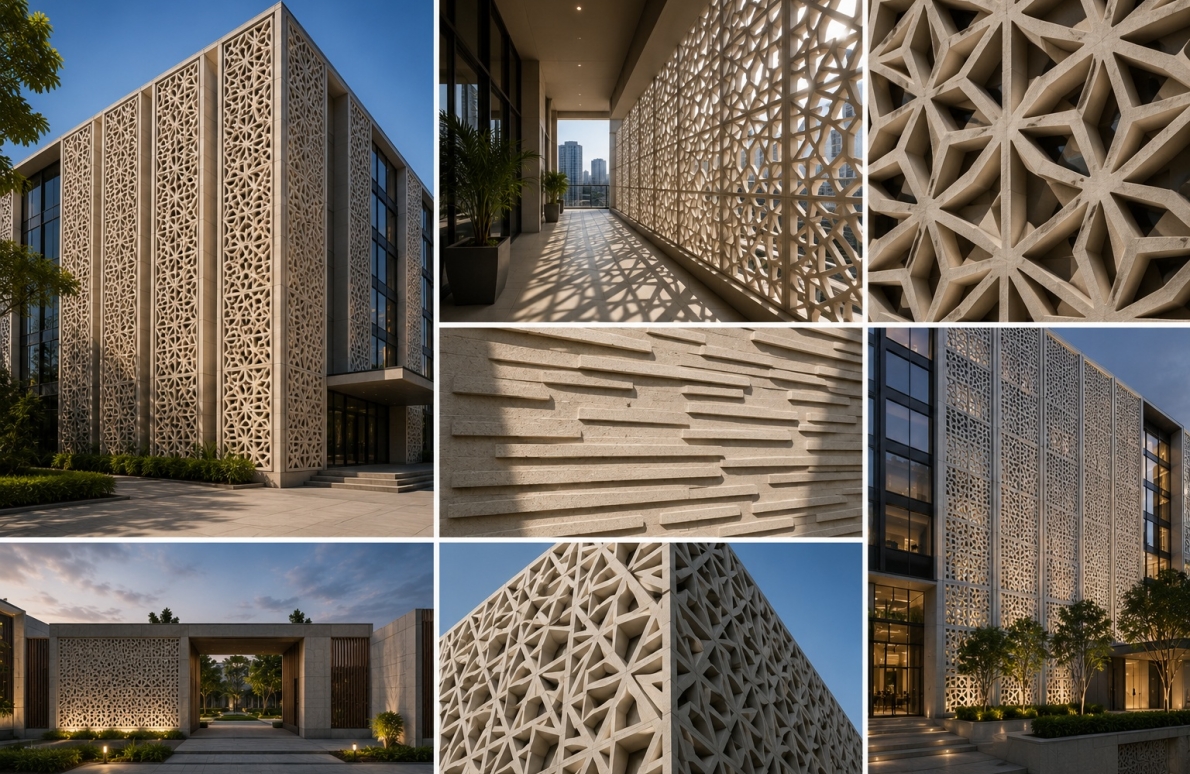
GRC jalis are especially effective in creating shadow play. Their perforated patterns filter light and cast moving shadows on walls, floors and internal spaces. This gives the building a living quality.
Architectural screens, fins and deep facade elements can also create strong shadow lines. These shadows help define the elevation and make the building look more layered.
A facade without shadow can feel flat. A facade with controlled shadow feels designed.
The Importance of Depth in Modern Facades
Depth is what separates a flat elevation from a strong architectural composition. When a facade has depth, it creates layers. These layers add visual richness and make the building more engaging.
Depth can be created by placing elements at different levels. For example, a jali screen may sit in front of the main wall. A panel may have raised or recessed patterns. A planter may extend from the building edge. A balcony screen may create another layer over the main structure.
Depth helps the facade appear more premium because it creates complexity without clutter.
It can be used to:
- Highlight entrances
- Create vertical or horizontal rhythm
- Add privacy to balconies
- Frame windows and openings
- Break large facade surfaces
- Create shaded zones
- Improve visual proportion
- Add identity to the building
Depth also improves the way a building is seen from different distances. From far away, the facade has a strong overall form. From close up, people notice texture, shadow and detail.
GRC Jalis: Adding Pattern, Shadow and Privacy
GRC jalis are one of the most effective ways to add depth and shadow to modern facades.
A jali screen creates a second layer over the building surface. It filters light, allows airflow, provides privacy and creates a unique pattern across the elevation. Unlike solid cladding, a jali has openness. It interacts with the environment.
GRC jalis can be used for:
- Balcony facades
- Hotel room screens
- Parking facades
- Commercial elevations
- Podium screens
- Staircase screening
- Terrace privacy walls
- Landscape partitions
- Entrance features
The pattern of the jali can be customized according to the project. It can be geometric, traditional, parametric, organic or minimal. The same material can create many different design languages.
For premium residences, jalis can provide balcony privacy while adding elevation rhythm. For hotels, they can create a refined facade identity. For malls and commercial buildings, they can create a landmark exterior with strong visual recall.
GRC Panels: Creating Surface Texture and Architectural Rhythm
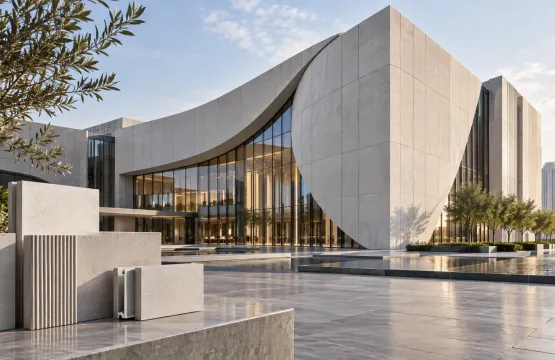
GRC panels are ideal for creating texture and structured surfaces. Unlike flat cladding, GRC panels can be moulded with relief patterns, grooves, ribs, curves or custom profiles.
They can be used on facades, feature walls, lobbies, podiums, entrance zones and boundary surfaces.
GRC panels help create:
- Surface depth
- Material clarity
- Visual rhythm
- Premium finishes
- Custom geometry
- Strong architectural identity
For modern facades, panels can be designed as repeated modules or large feature surfaces. They can be used to create a clean minimal look or a bold sculptural effect.
When combined with lighting, textured panels can become even more powerful. Light grazing across a textured surface creates shadows that change the mood of the building.
Screens as a Layered Facade Strategy
Architectural screens are useful when a facade needs both performance and visual depth. Screens can be used to shade, filter, hide, protect and define.
They are especially useful for large commercial buildings, parking structures, malls, hotels and institutional projects.
A screen can:
- Reduce direct visual exposure
- Hide service areas
- Allow airflow
- Create shading
- Add pattern
- Improve facade proportion
- Build a unique identity
Screens are not just add-ons. When designed well, they become part of the building’s main architectural expression.
For example, a parking facade can look unfinished if left open. But with a well-designed GRC screen, it can become a visually integrated part of the building. Similarly, a mall facade can use screens to create a bold exterior identity and shade outdoor areas.
How Texture, Shadow and Depth Improve Building Perception
People often judge the quality of a building by what they see first. The facade communicates whether a project feels premium, standard, modern, traditional, durable or ordinary.
Texture, shadow and depth help improve this perception.
- A textured facade feels more crafted.
- A shaded facade feels more comfortable.
- A layered facade feels more architectural.
- A deep facade feels more premium.
- A patterned facade feels more memorable.
These qualities help a project stand out, especially in competitive real estate and commercial markets.
For developers, this can support better project positioning. For architects, it helps express the design concept more clearly. For users, it creates a richer experience of the building.
Facade Design for Different Project Types
Premium Residential Buildings
In premium residences, facade quality plays a major role in buyer perception. GRC jalis, balcony screens and textured panels can create privacy, shade and a refined exterior appearance.
Balcony jalis can create visual rhythm.
Textured panels can highlight entrance areas.
Screens can add identity to podiums.
Planters can soften the facade at human level.
Together, these details help the project feel more exclusive and thoughtfully designed.
Hotels and Resorts
Hospitality facades need to feel welcoming, premium and memorable. Texture and shadow can create a strong emotional impact.
Jalis can provide guest privacy.
Screens can create dramatic entrances.
Textured panels can add luxury to arrival areas.
Patterned shadows can improve courtyards and semi-open spaces.
A hotel facade with depth can create a stronger arrival experience and better brand identity.
Malls and Retail Spaces
Malls need facades that attract attention. Flat surfaces may not create enough visual impact at large scale.
GRC screens and panels can create landmark elevations. Jalis can be used for parking facades, outdoor plazas and semi-open areas. Textured surfaces can frame entrances and retail zones.
For malls, facade depth can help create stronger visibility from the road and a more engaging visitor experience.
Corporate and Commercial Buildings
Commercial buildings often need clean, modern and professional facades. Texture and depth can help make them look premium without becoming visually heavy.
GRC panels can create refined surface rhythm.
Screens can control light and shade.
Jalis can add privacy and identity.
Planters can improve entrance and outdoor work zones.
This helps the building feel more complete and future-ready.
The Relationship Between Light and Material
Material selection is important, but how light interacts with the material is equally important. A material may look flat if it has no texture or depth. But the same material can appear rich if it has a surface profile that catches light.
GRC is effective because it can be designed with different textures and profiles. It can create soft shadows, sharp lines, deep patterns or subtle surface movement.
For facade design, the question is not only which material to use. The question is how that material will behave under sunlight, shade and artificial lighting.
A good facade design considers the building during morning, afternoon, evening and night. Shadow and depth help the facade remain interesting throughout the day.
Finish Options That Support Texture and Depth
Finishes play an important role in how facade elements are perceived.
GRC facade elements can be developed in finishes such as:
- Natural stone texture
- Sandstone finish
- Terracotta tone
- Concrete grey
- Off-white architectural finish
- Pigmented colour finish
- Smooth modern finish
- Textured handcrafted finish
- Ribbed or grooved surface
The right finish depends on the project type and design intent. A hotel may use warm earthy finishes. A commercial building may use clean grey or off-white tones. A premium residence may use textured stone-like surfaces for a timeless look.
The finish should work with the facade geometry, not against it.
Avoiding Visual Clutter
Adding texture, shadow and depth does not mean adding too many elements. A facade should feel rich, not cluttered.
Good facade design requires balance.
Too many patterns can confuse the elevation.
Too many materials can make the building look disconnected.
Too much depth without proportion can feel heavy.
Too little detail can look flat.
The goal is to create controlled visual interest.
A strong facade may use one primary pattern, one supporting texture and one consistent material palette. This keeps the design clean while still adding depth.
Why Custom Facade Elements Matter
Every project has a different context, scale and audience. A standard facade solution may not create the right identity. Custom GRC jalis, panels and screens allow architects to design elements that fit the project.
Customization can include:
- Pattern design
- Panel size
- Surface texture
- Colour and finish
- Opening ratio
- Thickness and profile
- Modular repetition
- Integration with landscape elements
This flexibility helps create facades that are project-specific rather than generic.
Final Thoughts
Modern facades need more than flat cladding. They need texture, shadow and depth to create stronger identity, better comfort and richer architectural expression.
Flat surfaces may complete a building, but layered surfaces define it.
GRC jalis add pattern, privacy and shadow. GRC panels add texture and rhythm. Architectural screens create depth and shading. Planters and other exterior elements bring the facade closer to human experience.
Together, these elements help buildings feel more premium, memorable and responsive to their environment.
For architects, texture, shadow and depth offer creative freedom. For developers, they improve project positioning and visual value. For users, they create buildings that feel more comfortable, engaging and thoughtfully designed.
A facade should not be treated as a flat cover.
It should be designed as a surface with expression, performance and identity.
That is the difference between a building that is simply finished and a building that is remembered.