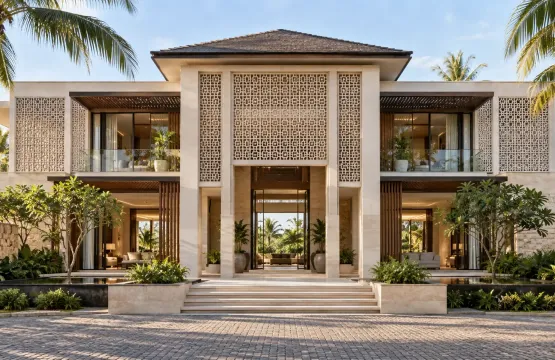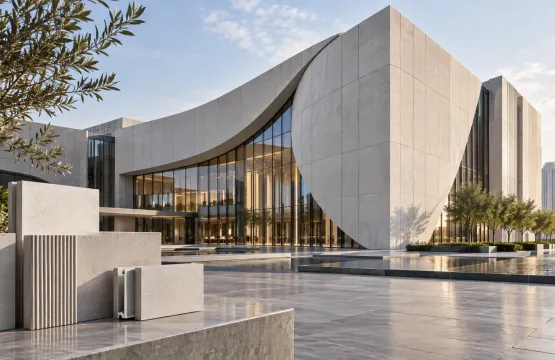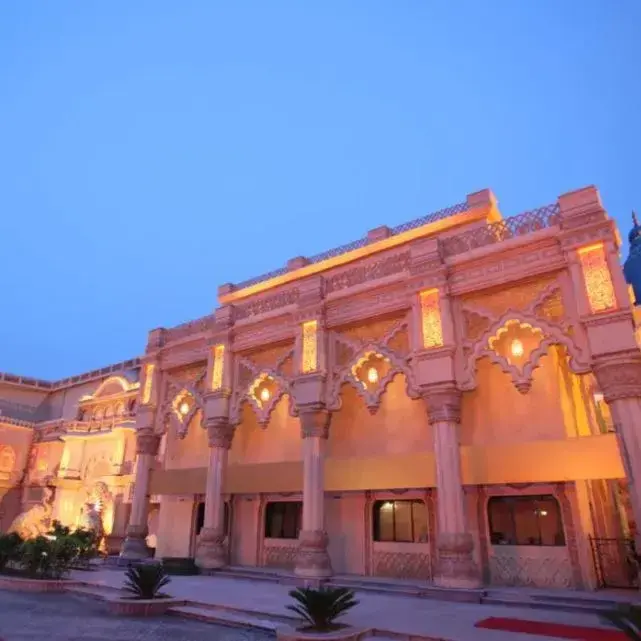
Building elevations are one of the most important parts of architectural design. They define how a project is seen from the outside, how it responds to climate, and how people remember it.
A strong elevation can make a residential tower look premium, a hotel feel iconic, a mall look more inviting, and a commercial building appear more refined.
One of the most effective ways to add depth, identity, and function to a building elevation is through custom GRC jalis.
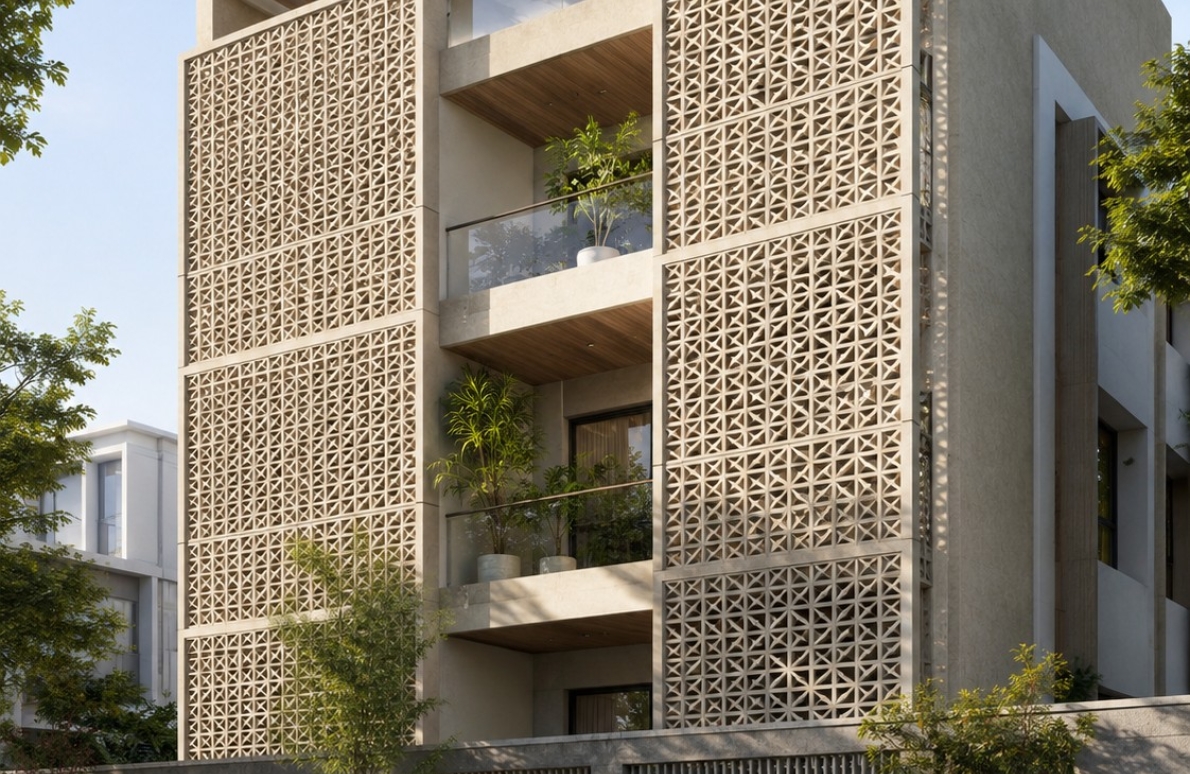
A GRC jali is not just a decorative screen. It is an architectural element that can control light, improve privacy, allow airflow, reduce visual heaviness, and create a unique design language for the façade. When customized properly, it becomes part of the building’s identity.
Custom GRC jalis are especially useful because every project has different requirements. A hotel may need privacy and luxury. A residential project may need balcony screening and elevation rhythm. A mall may need bold visual impact. A commercial building may need shading and service area screening.
A standard jali pattern cannot solve all these needs. This is why custom design matters.
What Are Custom GRC Jalis?
Custom GRC jalis are perforated architectural screens made from Glass Reinforced Concrete and designed specifically for a project.
They are developed according to the project’s:
- Architectural style
- Façade requirement
- Site conditions
- Pattern preference
- Size and scale
- Finish requirement
- Installation method
Unlike ready-made screens, custom GRC jalis allow architects and developers to create a façade element that fits the project perfectly.
Where Can Custom GRC Jalis Be Used?
Custom GRC jalis can be used across many architectural applications, including:
- Building elevations
- Balcony privacy screens
- Hotel façade screens
- Commercial façade features
- Podium elevations
- Parking façade screens
- Staircase and service area screening
- Terrace partitions
- Mall exteriors
- Courtyard screens
- Entrance feature walls
- Landscape partitions
The key benefit is flexibility. A custom GRC jali can be modern, traditional, geometric, organic, minimal, bold, or heritage-inspired depending on the project concept.
Why Custom Jalis Are Important for Building Elevations
A building elevation is not only about appearance. It also needs to respond to practical requirements such as sunlight, privacy, ventilation, views, durability, and maintenance.
Custom GRC jalis help solve these needs in a design-led way.
They can:
- Provide privacy without fully closing the space
- Allow air movement in semi-open areas
- Filter harsh sunlight
- Add depth and shadow to flat elevations
- Create a strong architectural identity
- Hide service areas without blocking ventilation
- Adapt to different project types and façade styles
This makes them highly suitable for modern Indian architecture, where buildings must respond to heat, light, privacy, and urban density.
Step-by-Step Process for Designing Custom GRC Jalis
Step 1: Understanding the Project Requirement
The first step in designing a custom GRC jali is understanding the project requirement. The jali should not be selected only because a pattern looks attractive. It must suit the function of the space and the overall architectural design.
Important questions include:
- Where will the jali be used?
- Is it for privacy, shading, ventilation, or decoration?
- Is it for a balcony, façade, parking area, or entrance?
- What is the scale of the building?
- What is the design language of the project?
- What level of openness is required?
- What finish will match the façade?
- What are the site conditions?
For example, a balcony jali for a residential tower may need a balanced opening ratio for privacy and airflow. A parking façade jali may need larger openings for ventilation. A hotel façade may need a refined pattern for guest privacy and luxury appeal.
Every application needs a different approach.
Step 2: Pattern Design
Pattern design is one of the most important stages in custom GRC jali development. The pattern determines how the jali looks, how much light passes through, how much privacy it provides, and how it affects the overall elevation.
Common GRC Jali Pattern Styles
Geometric Patterns
Geometric patterns are clean, modern, and suitable for commercial buildings, premium residences, and malls. They create a structured look and work well on large façades.
Traditional Patterns
Traditional motifs are suitable for hotels, resorts, cultural projects, and luxury residences. They bring a sense of heritage and architectural richness.
Parametric Patterns
Parametric jalis create a contemporary and dynamic look. These are suitable for landmark buildings and high-visibility façades.
Linear Patterns
Linear jalis are simple, elegant, and minimal. They work well for modern residences, offices, and commercial spaces.
Organic Patterns
Nature-inspired patterns are useful for resorts, wellness spaces, biophilic façades, and landscape-integrated buildings.
The pattern should be selected based on the building type, façade scale, privacy need, and required visual impact.
Step 3: Deciding the Opening Ratio
The opening ratio means how much of the jali is open and how much is solid. This is very important because it affects privacy, airflow, light, and shading.
- A dense jali pattern provides more privacy and stronger shading.
- An open jali pattern allows more airflow and visibility.
- A balanced pattern provides both privacy and natural light.
For residential balconies, a medium opening ratio often works well because the space needs privacy but should not feel dark.
For parking façades, a larger opening ratio may be required to support ventilation.
For hotel rooms, a denser pattern may be preferred to create privacy and comfort.
The opening ratio should never be decided randomly. It should match the function of the space behind the jali.
Step 4: Panel Size and Module Planning
Once the pattern is selected, the next step is panel size planning. A large façade usually cannot be made as one single jali panel. It must be divided into modules based on manufacturing, transportation, handling, and installation requirements.
Panel size depends on:
- Jali pattern
- Panel thickness
- Weight
- Structural support
- Installation method
- Site access
- Façade grid
- Joint placement
- Maintenance access
Good module planning ensures that the jali looks continuous after installation while remaining practical to manufacture and install.
Joints should be planned carefully so they do not disturb the pattern. The module layout should align with the building grid, balcony lines, window positions, and structural supports.
Step 5: Material and Thickness Planning
GRC is widely used for custom jalis because it offers design flexibility and can be moulded into detailed forms. However, the thickness and profile of the jali must be planned properly.
Thickness affects:
- Strength
- Weight
- Shadow depth
- Handling
- Fixing method
- Visual impact
A very thin jali may not provide the required strength for large panels. A very thick jali may become heavy or visually bulky.
The correct thickness depends on the panel size, pattern, location, and structural requirements. For building elevations, this stage should be coordinated with technical teams to ensure that the jali performs properly.
Step 6: Finish Selection
The finish of a GRC jali has a major impact on the appearance of the building elevation. A pattern may look completely different depending on the colour and texture used.
Popular GRC jali finish options include:
- Off-white architectural finish
- Concrete grey finish
- Natural stone texture
- Sandstone finish
- Terracotta tone
- Smooth modern finish
- Pigmented colour finish
- Textured handcrafted finish
For premium residences, neutral tones often work well because they feel timeless and refined.
For hotels, warmer textures can create a luxurious and welcoming appearance.
For commercial buildings, grey, white, or project-specific colours may suit the brand and design language.
The finish should coordinate with the façade, glazing, railings, planters, panels, and landscape elements.
Step 7: Prototype or Sample Review
Before final production, a sample or prototype is useful. It helps architects and developers review the pattern, scale, texture, colour, and shadow quality.
A pattern that looks good in a drawing may appear different when produced in actual material.
A sample helps the team check:
- Opening size
- Surface texture
- Edge quality
- Finish colour
- Pattern depth
- Light and shadow effect
- Visual proportion
- Material feel
This stage helps avoid mistakes before large-scale production begins.
Step 8: Manufacturing and Quality Control
After design approval, the custom GRC jalis move into production. The manufacturing process should maintain consistency across all panels.
Quality control is important because façade elements are highly visible. Inconsistent finish, uneven edges, or poor detailing can affect the final elevation.
Important checks include:
- Pattern accuracy
- Panel dimensions
- Surface finish
- Edge quality
- Thickness consistency
- Strength and handling quality
- Joint alignment
- Finish uniformity
For large projects, consistency is extremely important. A façade may include many repeated panels, and each one should match the approved design intent.
Step 9: Site Coordination
Before installation, proper site coordination is required. GRC jali panels need to align with the building structure, façade grid, and fixing system.
Important site coordination points include:
- Structural support readiness
- Fixing bracket positions
- Panel lifting and handling
- Access for installation
- Alignment with windows and balconies
- Joint spacing
- Safety during installation
- Sequence of work
- Protection of finished surfaces
If the site is not ready or fixing points are not coordinated, installation can become difficult.
Early coordination between the architect, façade consultant, contractor, and manufacturer helps ensure smooth execution.
Step 10: Installation
Installation is the final stage where the design becomes part of the building elevation. The jali panels must be handled carefully and fixed according to the approved method.
During installation, attention should be given to:
- Panel alignment
- Level and plumb
- Joint consistency
- Secure fixing
- Pattern continuity
- Surface protection
- Cleaning after installation
- Final inspection
A well-installed GRC jali should look integrated with the building. It should not appear like an added object. The joints, edges, and supports should be clean and coordinated.
Applications of Custom GRC Jalis
Custom GRC Jalis for Residential Buildings
In residential projects, custom GRC jalis are mainly used for privacy, balcony design, and elevation rhythm. They can transform a simple residential façade into a premium-looking building.
Applications include:
- Balcony privacy screens
- Terrace partitions
- Podium elevation screens
- Clubhouse jalis
- Entrance feature walls
- Staircase screens
- Service area concealment
Balcony jalis are especially useful because they create privacy while allowing light and air. When repeated across the elevation, they create a strong visual pattern.
Custom GRC Jalis for Hotels
Hotels need façades that feel premium and memorable. Custom jalis can create privacy for guest areas while giving the building a strong design identity.
Applications include:
- Guest balcony screens
- Room façade jalis
- Courtyard screens
- Outdoor dining partitions
- Spa area privacy screens
- Entrance feature façades
- Service area screening
Hotel jali patterns can be designed to reflect luxury, local culture, or the brand identity of the property.
Custom GRC Jalis for Malls
Malls and retail spaces need large visual impact. A custom GRC jali can help create a landmark façade that attracts attention and improves the overall exterior experience.
Applications include:
- Main façade screens
- Parking façade jalis
- Entrance portal features
- Outdoor plaza screens
- Food court terrace partitions
- Retail edge screens
- Service area concealment
Large geometric or bold custom patterns often work well for malls because they are visible from a distance.
Custom GRC Jalis for Commercial Buildings
Commercial buildings require façades that are clean, professional, and functional. Custom GRC jalis can provide shading, screening, and identity.
Applications include:
- Office façade screens
- Parking elevation screens
- Staircase screening
- Podium façade design
- Service area concealment
- Sun shading elements
- Entrance feature walls
They help commercial buildings look refined while solving practical façade needs.
Common Mistakes to Avoid in Custom Jali Design
Custom jali design should be handled carefully. Some common mistakes include:
- Selecting a pattern without considering scale
- Ignoring airflow and privacy needs
- Using too many patterns on one façade
- Not planning joints properly
- Choosing the wrong opening ratio
- Ignoring fixing requirements
- Not reviewing samples before production
- Selecting finishes without considering the overall façade
- Treating the jali only as decoration
A successful GRC jali balances design, performance, and execution.
Why Developers Should Invest in Custom GRC Jalis
For developers, custom GRC jalis can add strong value to a project. They improve visual identity, create a premium impression, and support practical building needs.
Key benefits include:
- Better façade recall
- Improved project positioning
- Enhanced privacy for users
- Stronger elevation design
- Premium exterior appeal
- Better integration with architecture
- Long-term visual value
In competitive real estate and commercial markets, a distinctive façade can help a project stand out.
Why Architects Prefer Custom Jali Solutions
Architects prefer custom jalis because they allow more control over the building expression. The jali can be designed to match the project’s concept rather than forcing the project to fit a standard product.
Custom jalis allow control over:
- Pattern
- Scale
- Finish
- Opening ratio
- Panel size
- Shadow effect
- Privacy level
- Material expression
- Façade rhythm
This makes them a flexible architectural tool for both aesthetic and functional design.
Final Thoughts
Custom GRC jalis are powerful architectural elements for building elevations. They combine privacy, light control, airflow, shadow, depth, and visual identity in one system.
From pattern design to installation, every stage matters. A good jali is not just about an attractive pattern. It must be designed according to the project’s climate, façade requirement, scale, material finish, and installation method.
For residences, custom jalis improve privacy and elevation rhythm. For hotels, they create luxury and guest comfort. For malls, they deliver visual impact. For commercial buildings, they provide shading, screening, and identity.
A well-designed GRC jali can make a building more memorable, more comfortable, and more architecturally refined.
In modern façade design, customization is the difference between a standard elevation and a signature building.