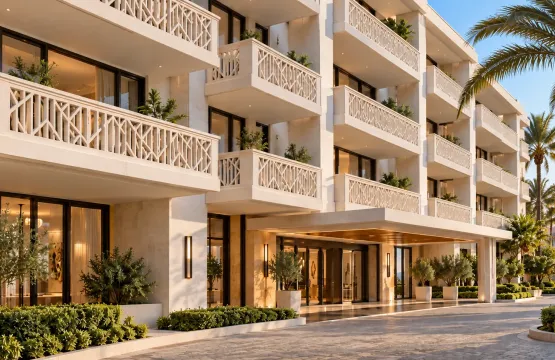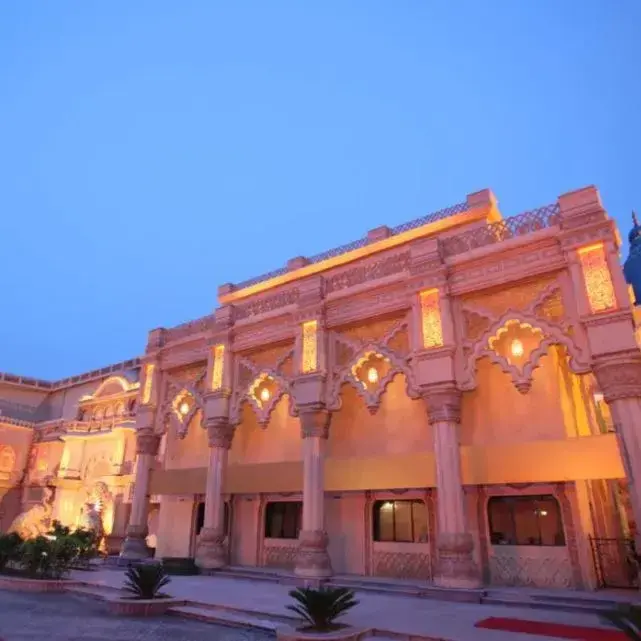
Something has shifted in facade specification across India's commercial construction sector.
Walk through the business districts of Mumbai, Bengaluru, Hyderabad or Delhi NCR and you begin to notice it - buildings with facade cladding that has a depth, a texture and a presence that glass curtain wall and aluminium composite panels simply cannot replicate. Buildings that look considered. Buildings that look like they were designed, not assembled from a catalogue.
The material making this shift visible is GRC panels. And the architects driving the specification change have very specific reasons for moving away from traditional cladding systems toward Glass Reinforced Concrete on commercial facade projects.
At DECO, we manufacture GRC panels for commercial facades across India. This blog is a direct answer to the question we hear most often from architects encountering GRC panels for the first time - why is GRC the better choice over stone, precast, ACP or other traditional cladding for a commercial project?
GRC Panels vs Traditional Cladding - The Numbers

The Problem With Traditional Cladding Systems on Commercial Buildings
Traditional facade cladding materials - stone, precast concrete, brick, aluminium composite panels - have served commercial construction for decades. Each has genuine strengths. Each also has limitations that become more significant as the demands on commercial building facades increase.
Stone - Premium Aesthetic, Significant Practical Limitations
Natural stone carries an undeniable aesthetic authority. But on commercial buildings, stone cladding creates a set of specification challenges that project teams underestimate until they are on site dealing with the consequences. Weight is the first - stone cladding adds significant dead load to the facade support structure, with cost implications that compound on tall buildings. Consistency is the second - natural stone varies between quarry batches in colour and texture, making visual consistency across a large facade area difficult to guarantee. And maintenance is the third - stone is porous, it stains, it develops biological growth in Indian monsoon conditions and it requires periodic cleaning and surface treatment to maintain its appearance.
Precast Concrete - Durable but Heavy and Limited
Precast concrete is structurally robust and genuinely durable. But it is heavy - significantly heavier per square metre than GRC panels of equivalent visual coverage. The weight constraint limits panel size, which means more joints across the facade. And precast concrete's surface quality - while adequate for utilitarian applications - does not deliver the surface refinement that premium commercial architecture increasingly demands. Custom profiles and fine detail are expensive and slow to produce in standard precast concrete.
Aluminium Composite Panels - Lightweight but Fire-Problematic
ACP became dominant on Indian commercial facades through the 1990s and 2000s primarily because of its light weight, low cost and ease of installation. The fire performance problems of standard ACP - dramatically highlighted by high-profile facade fires globally - have forced a fundamental reassessment of ACP specification on commercial buildings in India. Non-combustible GRC panels have directly benefited from this reassessment. On buildings where facade fire compliance is a genuine specification requirement, ACP is no longer the default choice it once was.
Why GRC Panels Solve What Traditional Cladding Cannot
Fire Safety That Is Not Negotiable
DECO GRC panels are non-combustible - Euroclass A1 fire rated as a fundamental material property, not as a surface treatment or an add-on. On commercial high-rise buildings, mixed-use developments, hotels and institutional buildings where facade fire compliance is a genuine specification requirement - GRC panels provide a clean, straightforward compliance answer. This is increasingly the primary specification driver for architects moving away from ACP and toward GRC on commercial projects across India.
Weight That Changes the Structural Calculation
DECO GRC panels are up to 75 percent lighter than equivalent precast concrete or stone panels. On a large commercial facade this weight saving directly reduces the dead load the facade support structure carries - which reduces the structural cost of the support system and the load transferred to the primary building structure. On tall commercial buildings where facade dead load is a significant structural consideration, GRC's weight advantage is a specification driver that structural engineers actively advocate for.
Design Freedom That Stone and Precast Cannot Match
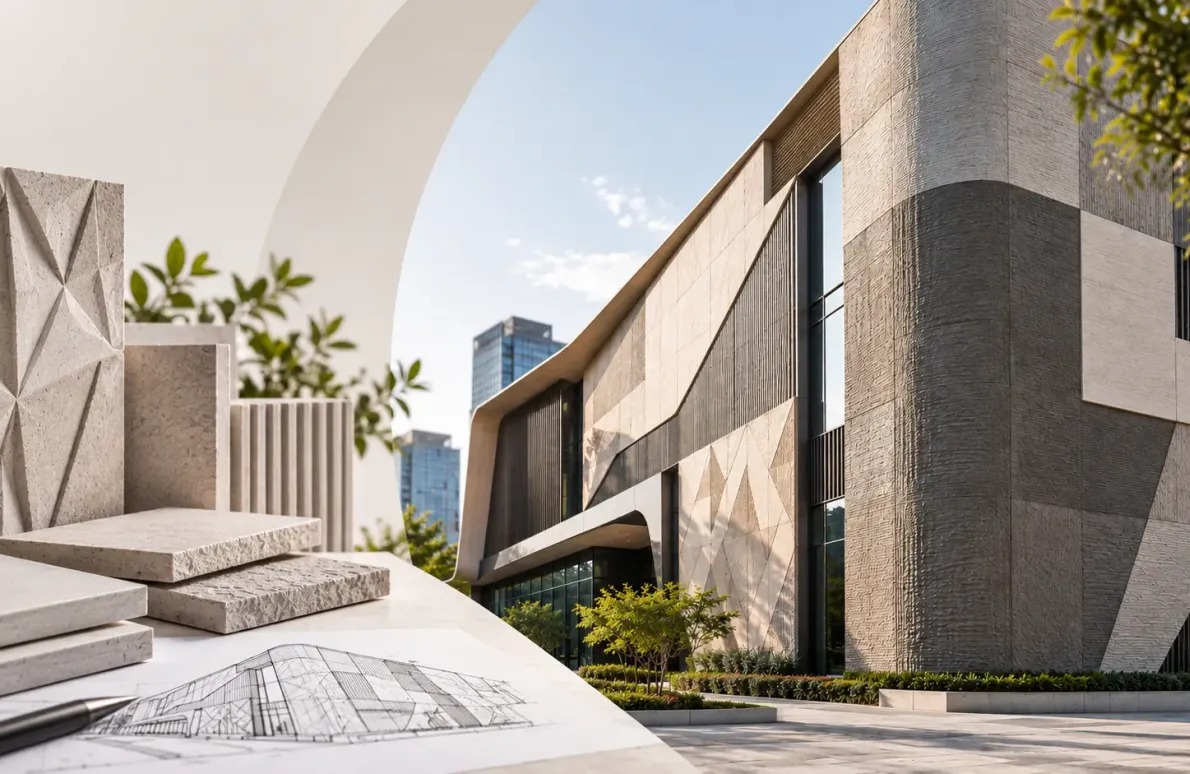
GRC is a cast material. This means the profile, texture, finish and form of every panel is a design decision - not a material constraint. Custom shadow line profiles. Textured surfaces that replicate stone, travertine or bespoke finishes. Curved panel forms. Integrated reveals and recesses. GRC panels deliver design outcomes on commercial facades that would require expensive stone carving or complex precast formwork to achieve - and they deliver them consistently across the full production run.
DECO manufactures GRC panels in fully custom profiles and finishes - developed from the architect's facade drawings rather than selected from a standard catalogue. This design flexibility is one of the most significant reasons architects working on commercial projects where the facade is expected to be distinctive are choosing GRC over traditional cladding systems.
Manufacturing Consistency at Commercial Scale
A commercial building facade may involve three hundred, five hundred or more individual cladding panels. Every panel needs to match every other panel in its zone - in dimension, in surface finish, in colour. Natural stone cannot guarantee this consistency. Standard precast concrete shows surface variation. ACP achieves consistency but at the cost of fire performance.
DECO GRC panels are produced under factory-controlled conditions with tight dimensional tolerances and surface finish quality maintained across the full production run. Every panel from the same mold matches. For commercial architects specifying large facade areas where visual consistency is a design requirement, this manufacturing reliability is a direct quality advantage over stone and precast alternatives.
Long-Term Surface Performance in Indian Conditions
Indian commercial buildings face demanding outdoor conditions - heavy monsoon rainfall, intense UV exposure, high humidity and in coastal cities, persistent salt air. GRC panels have low porosity - they resist the moisture absorption, staining and biological growth that affect stone and standard concrete facades in these conditions. DECO GRC panels are UV stable and do not require the periodic surface treatment that porous cladding materials need to maintain their appearance.
For commercial building owners and facilities management teams managing large buildings across long operational lifespans, this low maintenance surface performance is a meaningful lifecycle cost advantage over traditional cladding materials.
Specification insight: The shift toward GRC panels on Indian commercial facades is not driven by architects looking for something new. It is driven by architects who have experienced the limitations of traditional cladding - the maintenance costs of stone, the fire concerns with ACP, the weight of precast - and found in GRC a material that resolves all three without trading one problem for another.
Commercial Building Types Where Architects Are Specifying GRC Panels
The shift toward GRC panels is visible across every category of commercial building specification in India - driven by the combination of fire compliance pressure, weight reduction requirements and the growing demand for facade identity on commercial buildings.
- Corporate office towers and IT parks - where facade fire compliance, weight efficiency and visual consistency across large floor counts all drive GRC specification
- Five star hotels and premium hospitality - where surface quality, custom profile design and long-term appearance maintenance are the primary specification drivers
- Mixed use commercial developments - where a single facade material needs to express different characters across retail, office and residential zones within one building
- Institutional and civic buildings - where facade permanence, low maintenance and design authority over decades are the specification priorities
- Healthcare and hospital buildings - where non-combustible facade materials and low-maintenance surface performance are clinical and operational requirements
- Retail and shopping mall facades - where distinctive facade identity, high footfall durability and low maintenance between cleaning cycles are all required simultaneously
Frequently Asked Questions
Q1. Why are architects replacing ACP with GRC panels on commercial building facades?
The primary driver is fire performance. Standard ACP with a combustible polyethylene core has been identified as a significant fire risk on high-rise building facades globally. GRC panels are non-combustible - Euroclass A1 fire rated - as a fundamental material property. On commercial buildings where facade fire compliance is a genuine specification requirement, GRC panels provide a straightforward compliant alternative that also delivers better surface quality, longer lifespan and greater design flexibility than ACP.
Q2. How do GRC panels compare to stone cladding for commercial facades?
GRC panels are up to 75 percent lighter than equivalent stone cladding, which directly reduces structural dead load and installation cost on commercial facades. GRC is factory manufactured to consistent dimensional tolerances - eliminating the natural colour and texture variation that affects stone across large facade areas. GRC has lower porosity than most natural stone - resisting staining and biological growth more effectively in Indian outdoor conditions. And GRC can be produced in custom profiles that would require expensive stone carving - at a fraction of the cost and lead time.
Q3. Can DECO GRC panels replicate stone or textured finishes for commercial facade applications?
Yes. DECO manufactures GRC panels in a range of surface finishes that replicate the character of stone, travertine, sandstone, granite and other natural materials - as well as smooth, fine textured and custom profiles. All finishes are achieved through the casting and manufacturing process - not applied as surface coatings - ensuring the finish runs through the material depth and maintains its character over the full lifespan of the building.
Q4. Are GRC panels suitable for high-rise commercial facade applications in India?
Yes. DECO GRC panels are specified on high-rise commercial facades across India - from corporate office towers and IT parks to premium hotel towers and mixed use landmark developments. GRC's non-combustible fire rating, lightweight structural profile, wind load compliance in thin sections and long-term surface performance in Indian outdoor conditions make it specifically well suited to high-rise commercial facade applications.
Q5. What is the lead time for DECO GRC panels on a commercial project?
DECO's standard lead time for GRC panels on commercial projects is 8 to 12 weeks from final design approval and sample sign-off. For large commercial projects with phased delivery requirements, DECO programmes production in phases coordinated with the site's installation sequence. Early engagement - at design development stage - allows production to be programmed without creating critical path pressure on the construction programme.
The Specification That Solves Three Problems Simultaneously
The architects specifying GRC panels on commercial projects across India are not following a trend. They are responding to the convergence of three specification pressures that traditional cladding materials cannot address simultaneously.
Fire compliance - the non-combustible performance that ACP cannot provide and that is no longer negotiable on serious commercial buildings. Weight efficiency - the structural dead load reduction that stone and precast cannot deliver at comparable design quality. And design freedom - the custom profile, texture and finish capability that glass and aluminium systems cannot achieve.
GRC panels resolve all three without trading one advantage for another. That is why the specification shift is happening - and why it is accelerating across commercial construction in India's major cities.
DECO manufactures GRC exterior panels for commercial facade projects across India - working with architects and developers from design development through to delivery. The specification conversation starts with the building's specific requirements and ends with a GRC panel system that addresses them directly.
To explore DECO Panel capabilities and finishes, visit DECO Panels by The Global Elephant.