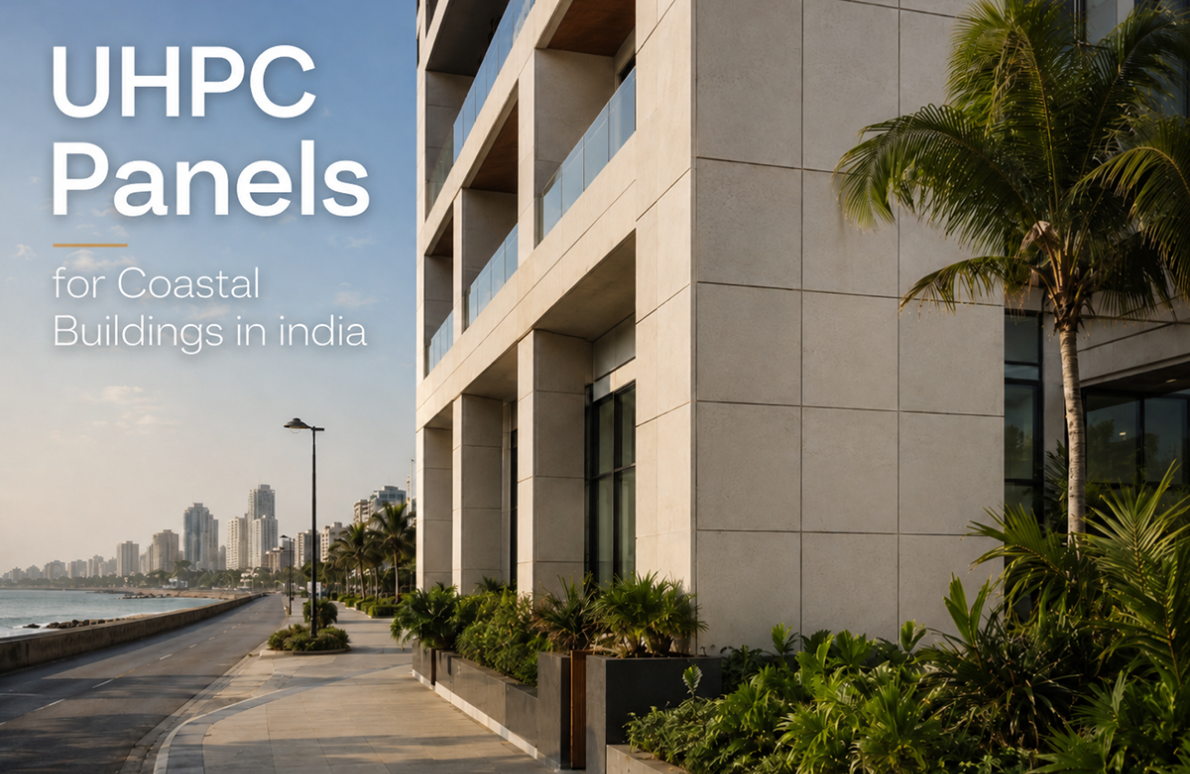
Anyone who has managed a building within a few kilometres of the coast knows the same story. The facade looks flawless at handover. Eighteen months later, there are rust streaks bleeding through the paint, hairline cracks along panel joints, and a maintenance contract that keeps growing every renewal cycle. Salt air doesn't forgive weak specification, and coastal buildings in India - from Mumbai's western suburbs to the resort belts of Goa and the Konkan coast - are unforgiving proving grounds for facade materials.
This is where DECO UHPC Panels, engineered by The Global Elephant, have started to change the conversation. Ultra-High-Performance Concrete isn't just another cladding option; it's a material built around the exact conditions that break conventional facades near the sea.
Why Coastal Environments Destroy Ordinary Facades
Salt-laden air is corrosive in ways that are easy to underestimate. Airborne chloride particles settle on exterior surfaces, work their way into micro-cracks and pores, and accelerate the corrosion of any embedded steel reinforcement. Combine that with high humidity, intense UV exposure, and the wet-dry cycling of monsoon seasons, and you get a maintenance problem that compounds year after year.
Traditional stone cladding is heavy and porous enough to absorb moisture and salts over time, leading to staining and surface degradation. Standard reinforced concrete panels are even more vulnerable - chloride ingress reaches the rebar, corrosion begins, and the resulting rust expansion cracks the concrete from the inside out. Metal cladding systems face their own version of the same problem: coatings wear thin, and once the substrate is exposed, corrosion moves fast in a marine atmosphere.
The result, across most coastal developments, is a facade that requires constant intervention - recoating, patching, replacing fixings - just to maintain a presentable exterior.
What Makes DECO UHPC Panels Different Near the Coast
DECO UHPC Panels are engineered at the material level to resist exactly this kind of environmental attack, and the difference comes down to density and permeability rather than any single additive.
An extremely dense, low-permeability matrix. UHPC is formulated with a very low water-to-cement ratio and fine reactive powders that pack tightly together, leaving minimal capillary pore space. With far fewer pathways for water and chloride ions to travel through, the corrosive process that damages ordinary concrete simply has much less material to work with.
Reduced dependence on traditional steel reinforcement. DECO's UHPC panel systems use fibre reinforcement instead of, or in addition to, conventional rebar. Where steel is used, the dense matrix around it dramatically slows chloride penetration, which means the panel's structural core stays protected far longer than it would in standard concrete.
High compressive and flexural strength in thin sections. Because UHPC is so strong per unit of thickness, DECO panels can be manufactured slender and lightweight without sacrificing structural performance. Thinner panels also mean less material mass exposed to the environment, and lighter loads on the substructure and fixings.
Consistent surface quality UHPC's fine, uniform composition produces a dense, smooth surface with very low absorption. That translates to better resistance to salt staining, algae growth, and the kind of surface pitting that makes ageing facades look tired long before their structural life is over.
The Maintenance Argument, in Practical Terms
For a coastal resort, hotel, or residential tower, maintenance isn't a footnote - it's an ongoing cost line that owners feel every year. DECO UHPC Panels shift that equation in a few concrete ways:
- No repainting cycles - Colour is integrated into the mix or achieved through factory-applied, weather-stable finishes, rather than relying on surface paint that has to be redone every few years.
- No corrosion staining - Without significant steel near the surface and without a porous matrix for chlorides to exploit, the rust streaks that plague ordinary concrete and metal panels are largely designed out of the picture.
- Fewer replacement cycles - A panel that resists cracking and surface degradation doesn't need to be swapped out every renovation cycle, which reduces both material cost and the disruption of scaffolding and access work on an operating building.
- Lower long-term lifecycle cost - Even though UHPC panels typically cost more per square metre upfront than standard concrete or basic cladding, the reduction in recurring maintenance, repainting, and replacement expenses tends to even out - and often improve - the total cost of ownership over a 15–20 year horizon.
For hospitality properties specifically, there's a less obvious benefit too: guest-facing facades that don't visibly age. A resort's exterior is part of the guest experience from the moment someone arrives, and a coastal property with streaked, patched cladding sends a very different signal than one with a DECO facade that still looks crisp a decade in.
Design Freedom Without the Usual Trade-Offs
Coastal architecture often wants to lean into organic, sculptural forms - wave-inspired profiles, deep reveals, perforated screens that filter sea breeze and glare. Historically, achieving that kind of geometry in a durable material meant compromising on either weight, cost, or longevity.
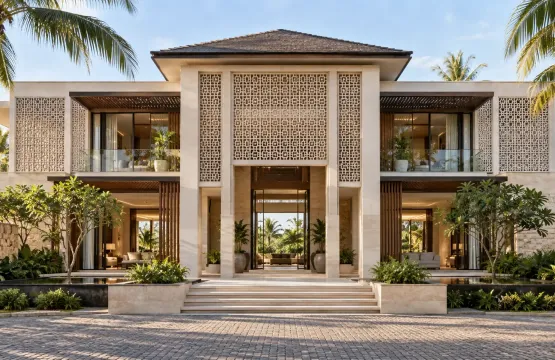
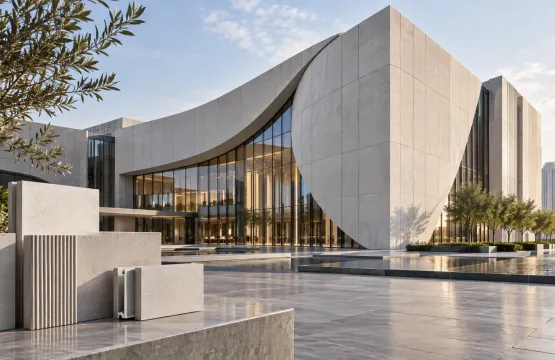
DECO UHPC Panels remove much of that trade-off. High early and final strength allows for slender profiles, cantilevered elements, and complex curves that would require far bulkier sections in ordinary concrete. Combined with a range of surface finishes - from smooth minimalist textures to more tactile, stone-like appearances - DECO gives architects a way to pursue distinctive coastal facade design without inheriting a maintenance headache down the line.
Specification Details That Matter
A few things are worth getting right at the specification stage for any coastal UHPC panel installation:
- Fixing hardware should match the panel's durability - stainless steel (typically SS316 grade) or other corrosion-resistant fastening systems, since even the best panel can be let down by fixings that rust and fail.
- Joint detailing and sealants need to be rated for marine exposure and UV stability, so movement joints don't become the weak point in an otherwise resilient system.
- Panel thickness and reinforcement strategy should be engineered for the specific wind loads and structural spans of the project, since coastal sites often carry higher wind design requirements than inland buildings.
DECO's manufacturing process at The Global Elephant is built around getting these details right at the factory stage, rather than leaving them to be resolved on site.
The Bottom Line
Coastal buildings don't need a facade that merely survives the first few years - they need one engineered for the environment from day one. DECO UHPC Panels offer a rare combination for this specific challenge: the strength and design flexibility architects want, paired with a resistance to salt, moisture, and corrosion that dramatically cuts the maintenance burden owners actually deal with over time.
For projects along India's coastline - resorts, residential towers, and commercial developments alike - that combination is increasingly the difference between a facade that ages gracefully and one that becomes a recurring line item on the maintenance budget.
To explore DECO's full range of architectural panels and finishes, visit DECO by The Global Elephant.