Most architects can describe what they want a jali screen to feel like long before they can describe what it should actually look like. "Something that feels rooted in the region but reads as contemporary." "A pattern that references our brand without being literal about it." "Geometric, but not cold." These are legitimate design instincts, but they're not yet a pattern, and the gap between an instinct and a production-ready GRC screen is where most of the real design work in a custom jali project actually happens.
This is a walkthrough of that gap: how a custom GRC jali pattern actually gets developed, from an initial idea to a screen that's technically buildable, structurally sound, and ready for full production.
Starting With Intent, Not Geometry
The strongest custom jali screens rarely start with a grid or a motif. They start with a question: what is this screen actually supposed to communicate or achieve? A resort entrance jali screen and a corporate headquarters jali screen might both end up as geometric lattice patterns, but the design reasoning behind each should be entirely different, one aiming for warmth and hospitality character, the other for precision and institutional confidence.
This framing stage typically surfaces a few decisions that shape everything downstream: whether the pattern should feel traditional or contemporary, whether it needs to reference something specific (a brand mark, a regional motif, a cultural pattern language), and what functional performance it needs to deliver alongside its appearance, privacy level, shading percentage, structural span.
Translating Intent Into a Repeatable Module
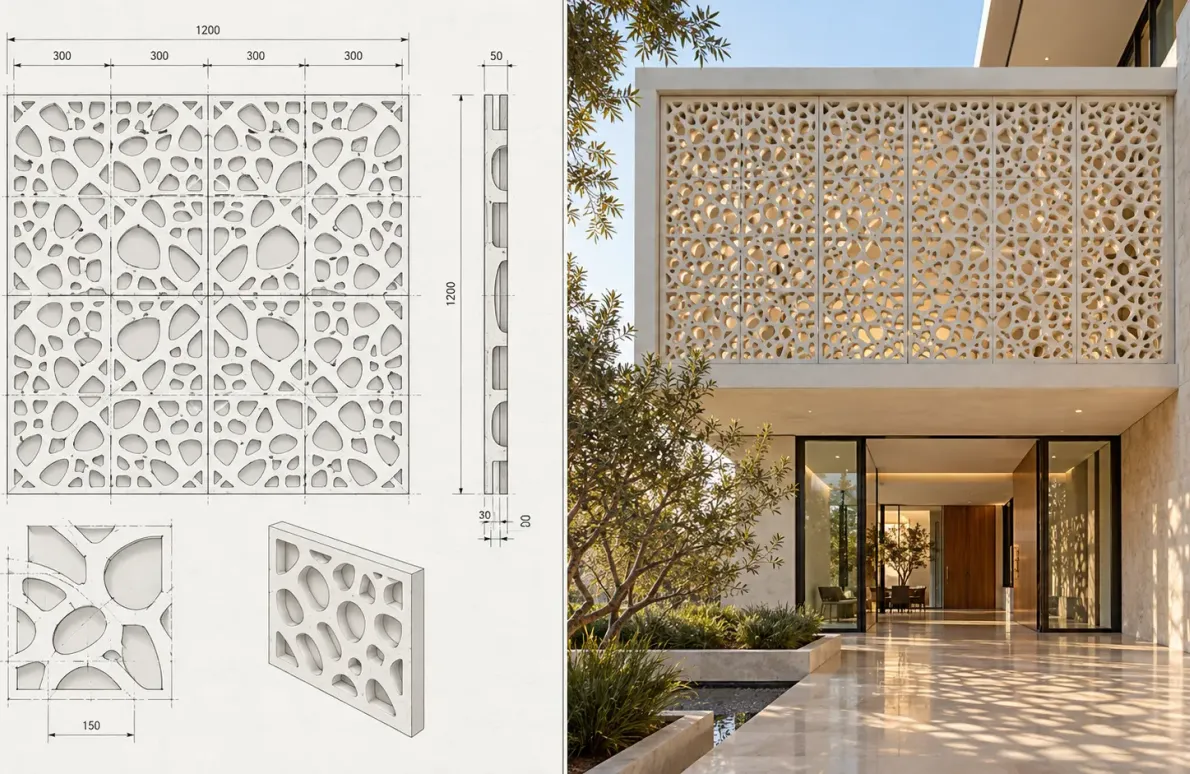
Once the design direction is set, the next stage is developing a repeat unit, a single module that will tile across the full jali screen. This is where a lot of custom pattern development actually lives, because a pattern that looks compelling as a one-off graphic often breaks down when repeated hundreds of times across a large facade.
A few things get tested at this stage. Does the module read clearly at the distance it will actually be viewed from, up close on a balcony screen versus from across a plaza for a large facade installation? Does the repeat create unwanted visual artifacts, moiré effects, awkward seams, or a rhythm that feels mechanical rather than intentional, when tiled edge to edge? Does the pattern's openness ratio, the proportion of solid material to void, deliver the shading, privacy, or airflow performance the project actually needs, or does it need adjusting purely for visual reasons that compromise function?
This is typically an iterative back-and-forth between the architect's design intent and the manufacturer's technical constraints, refining the module until it satisfies both.
Where Pattern Inspiration Actually Comes From
Custom GRC jali screens tend to draw from a handful of design starting points, often blended together rather than used in isolation:
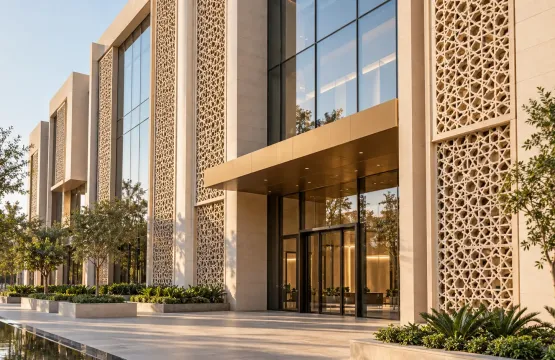
Geometric and mathematical patterns. Islamic-inspired lattice geometries, parametric algorithmic patterns, and modular grid systems all translate well into a jali screen because they're inherently repeatable and scale consistently across a large facade.
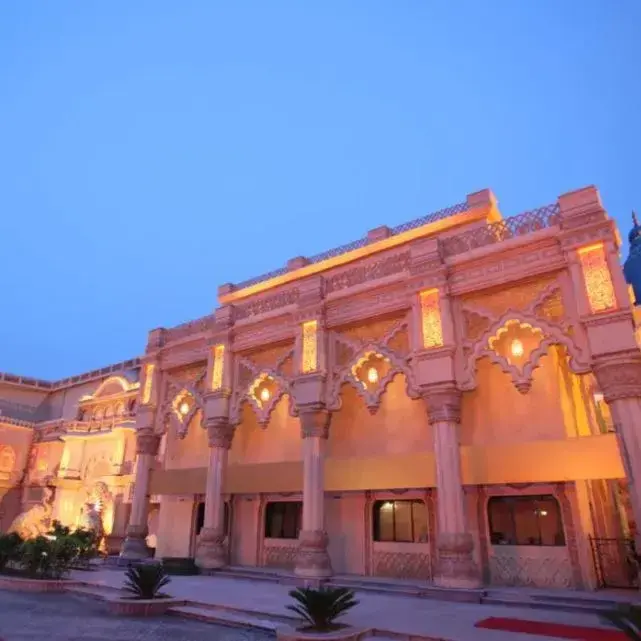
Regional and cultural motifs. Reinterpreting traditional jali forms, jharokha detailing, or regional architectural vocabulary gives a contemporary building a sense of place, without needing to replicate historic ornamentation literally.
Brand and identity-driven forms. Abstracting a company logo, a recurring brand shape, or a proportion system unique to a client's visual identity turns the jali screen into a literal piece of brand architecture rather than a generic decorative element.
Organic and biomorphic forms. Patterns inspired by natural structures, leaf venation, cellular structures, water ripple patterns, offer a softer, less rigidly geometric alternative for projects wanting a more organic design language.
Site-responsive patterns. Some of the most distinctive jali screens develop their density and orientation directly from the sun path or view conditions specific to that facade, so the pattern itself becomes a response to the building's context rather than a decorative layer applied independently of it.
Turning the Design Into a Buildable GRC Screen
A pattern that looks right on screen still has to survive contact with real material constraints before it becomes an actual GRC screen, and this stage is where design and manufacturing genuinely have to work together.
Minimum section thickness. Every void in the pattern needs enough solid material around it to remain structurally sound once cast in GRC, thinner or more delicate details than the material can reliably support need to be adjusted, reinforced, or simplified.
Panel sizing and joint placement. The pattern has to be divided into individual panels for manufacturing and transport, and joint lines need to be planned so they don't interrupt the pattern in a visually awkward way, ideally falling along a natural break in the repeat rather than through the middle of a motif.
Fixing point integration. The pattern needs to accommodate the structural fixing points that will actually hold the panel to the building, worked into the design early rather than retrofitted after the pattern is finalized.
Sample panel approval. Before full production, a physical sample panel is typically cast so the architect can review the pattern, finish, and shadow quality in real material and real light, something a rendering can approximate but never fully replicate.
What Makes a Signature Screen Actually Signature
The difference between a jali screen that reads as generic and one that functions as a genuine signature element for a project usually comes down to a few deliberate choices made during pattern development:
- Restraint in complexity. The most memorable jali screens are rarely the busiest ones, a clear, confident pattern at the right scale usually reads more distinctively than an overly intricate one that becomes visual noise from a distance.
- Consistency with the building's broader design language, so the screen feels integrated into the architecture rather than applied on top of it as a separate decorative layer.
- A pattern density that varies intentionally, where appropriate, denser in areas needing more privacy or shade, more open where light and views matter more, rather than a single uniform density applied everywhere by default.
- Genuine uniqueness to the project, rather than a stock pattern with minor tweaks, since a pattern that could belong to any building rarely achieves the "signature" quality a custom development process is meant to deliver.
The Bottom Line
A custom GRC jali screen earns the word "signature" through a design process, not through the material alone. Getting from an initial creative instinct to a pattern that performs structurally, functions as intended, and genuinely feels specific to one project takes deliberate development, testing the repeat, refining the openness ratio, resolving panel joints, and reviewing physical samples, well before a single panel goes into production.
DECO, from The Global Elephant, works with architects through every stage of this process for custom GRC jali screens, from initial pattern concept through technical development to full production.
To explore DECO's custom GRC jali capabilities, visit DECO Jalis by The Global Elephant.