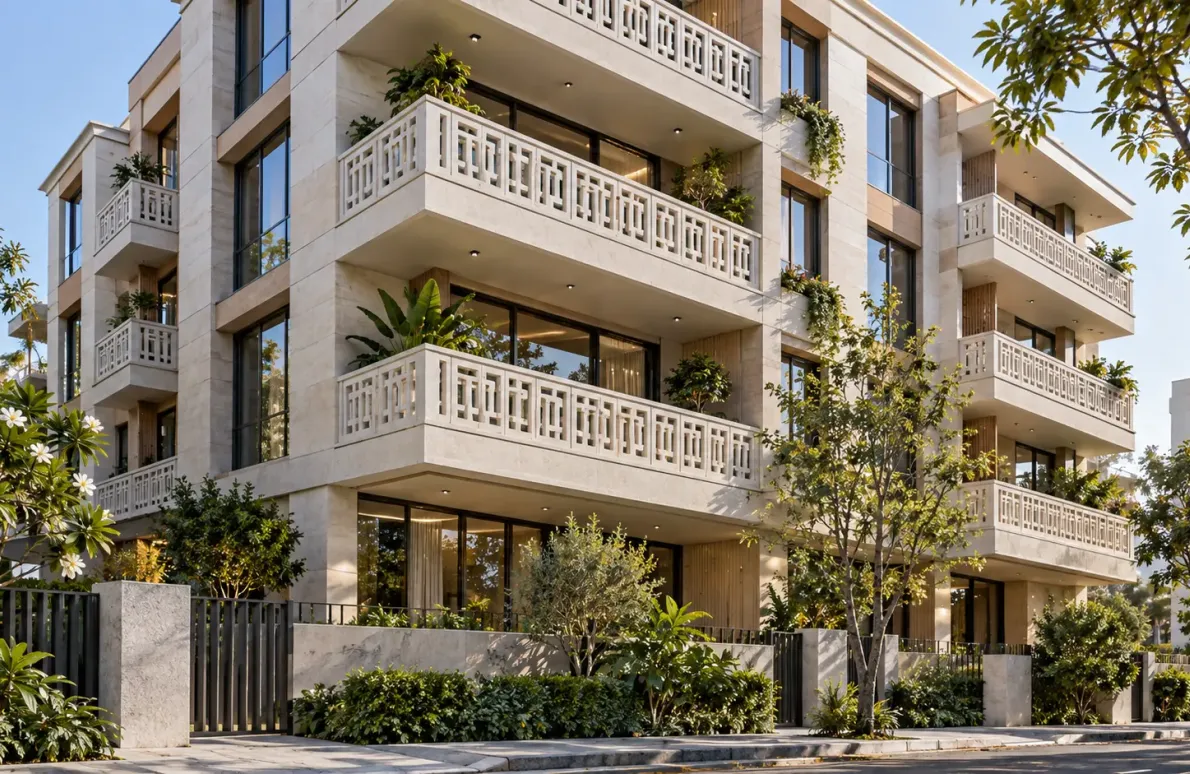
The railing is one of the most visible elements on any building facade - and one of the most consistently underspecified.
It runs along every balcony, every staircase, every terrace edge. It appears in photographs of the building. It is touched by every resident and guest who uses the outdoor spaces. And it faces the full force of Indian outdoor conditions - monsoon rainfall, intense UV, coastal salt air - year after year without the protection of a covered environment.
Given all of this, the decision to specify a railing in painted steel, standard aluminium or basic precast concrete - materials that corrode, fade and deteriorate in exactly the conditions a railing faces - is one of the most common and most consequential specification errors in Indian commercial and residential construction.
As part of the DECO Products range - which includes GRC Panels, Jali screens, Planters, Furniture, Fences and ArtCraft - DECO GRC Railings are manufactured to the same standard of material quality and design precision that architects across India have come to expect from the DECO brand. GRC railing systems offer a fundamentally different approach. As one of India's specialist GRC railing manufacturers, DECO produces custom GRC railings for balconies, staircases, terraces and corridor edges on commercial, residential and hospitality buildings across India. This guide explains what makes GRC the right railing material for modern buildings - and what architects and builders need to know to specify it correctly.
GRC Railing - Why the Specification Matters
What Is GRC Railing and Why Is It Different?
GRC - Glass Reinforced Concrete - is a composite material manufactured from Portland cement, fine aggregate and alkali-resistant glass fibres. The glass fibre reinforcement provides tensile strength that standard concrete lacks - allowing GRC to be manufactured in the thin, refined sections that architectural railing profiles require without cracking or structural failure.
A GRC railing is not a concrete railing in the traditional sense. Traditional concrete railings are solid, heavy and limited in the profile complexity they can achieve. GRC railings are thin-walled, significantly lighter than solid concrete equivalents and capable of reproducing complex architectural profiles - classical balusters, geometric patterns, contemporary minimalist rails - with a surface quality and dimensional consistency that standard concrete casting cannot deliver.
The defining advantage of GRC over other railing materials is the combination of properties it delivers simultaneously. Corrosion-free unlike steel. Fire rated unlike aluminium composite. Custom profile capable unlike standard precast. Surface quality that holds in Indian outdoor conditions unlike painted metal. Understanding why each of these matters on a modern building sets the context for the GRC railing specification conversation.
Why Traditional Railing Materials Fail on Modern Buildings
Painted and Powder Coated Steel
Steel railings look sharp on installation day. The problems begin within a few years in Indian outdoor conditions. Corrosion establishes at welds, cut edges and any point where the surface coating is thin or damaged. In coastal environments - Mumbai, Goa, Chennai, Kochi, Visakhapatnam - salt air accelerates this dramatically. Rust stains run down the facade beneath the railing. The structural integrity of the railing deteriorates invisibly beneath the surface coating. By the time rust is visible on the outside, the railing often needs complete replacement rather than a surface treatment.
Aluminium Railings
Aluminium does not corrode in the same way steel does - but it oxidises, fades and loses its surface quality over time in Indian outdoor UV conditions. Aluminium composite railing systems have fire performance concerns that make them problematic on high-rise residential and commercial buildings where facade fire compliance is a genuine specification requirement. And standard aluminium extrusion profiles offer very limited design flexibility for architects working on buildings where the railing is expected to carry an architectural character rather than simply meet the structural requirement.
Standard Precast Concrete
Precast concrete railings are durable but heavy and limited in profile complexity. The surface quality of standard precast concrete is not appropriate for premium residential and hospitality applications where the railing is evaluated at close inspection range. And the weight of solid precast concrete railing elements creates installation challenges on upper floors of residential towers where handling and structural load both become significant considerations.
The railing specification on a modern building is a twenty-five year decision. The material that looks acceptable on handover day but creates rust stains, surface deterioration and eventual structural compromise within five to ten years is not a cost saving - it is a deferred cost that compounds into a significant liability for the developer, the building owner and the facilities management team.
What GRC Railing Delivers for Modern Buildings
Corrosion-Free Performance for the Full Building Life
DECO Products are designed for the full life of the building — and GRC Railings are no exception. DECO GRC railings contain no ferrous metal in the railing body - only stainless steel fixing components at the connection points with the structural slab or wall. Stainless steel does not corrode in outdoor conditions. The GRC material itself is unaffected by moisture, salt air, monsoon rainfall and the chemical environment that Indian outdoor conditions create.
There is no coating to degrade. No weld to corrode. No surface to rust. The corrosion-free performance of a DECO GRC railing is not dependent on a maintenance programme - it is inherent to the material. For buildings in coastal Indian cities where steel railing corrosion is a near-certain outcome within years of installation, this fundamental material advantage is the primary specification driver.
Custom Profile - Any Architectural Character
GRC is a cast material. The profile of a GRC railing element is a design decision - not a manufacturing constraint. Classical balusters with refined profiles and shadow detail. Geometric perforated railing panels. Contemporary minimalist flat rails with clean shadow lines. Traditional Indian architectural railing motifs in a modern material. Heritage-referencing profiles that carry the design language of the building into the railing detail.
DECO manufactures GRC railings in fully custom profiles developed from the architect's drawings. There is no standard catalogue that limits the design. The railing profile is specified to suit the building's architectural language - whether that is contemporary minimalist, classically inspired or anything between.
Surface Quality That Holds at Close Inspection Range
The railing is one of the few facade elements that building users touch regularly. Balcony residents lean against it every day. Hotel guests run their hands along the terrace railing. Staircase users grip it every time they move between floors. The surface quality of a railing is evaluated at close inspection range and through physical contact in a way that most other facade elements are not.
DECO GRC railings are manufactured with low porosity surfaces that resist staining, biological growth and the surface soiling that accumulates on outdoor railing elements in Indian urban environments. The surface quality on installation day holds across years of outdoor exposure without the periodic painting or surface treatment that metal railings require.
Structural Performance to Indian Standards
Railing structural performance is not optional - it is a safety requirement governed by Indian building codes. DECO GRC railings are manufactured to meet the structural performance requirements of IS 875 and NBC 2016 for balcony, terrace and staircase railing applications. Every GRC railing project receives structural calculations confirming compliance with the applicable load requirements for the specific building type and occupancy.
GRC Railing vs Other Materials - Direct Comparison
Where DECO GRC Railings Are Specified on Modern Buildings
GRC railing systems are specified across a wide range of building types in India - wherever the combination of design quality, corrosion resistance and long-term durability matters more than the lowest initial unit cost.
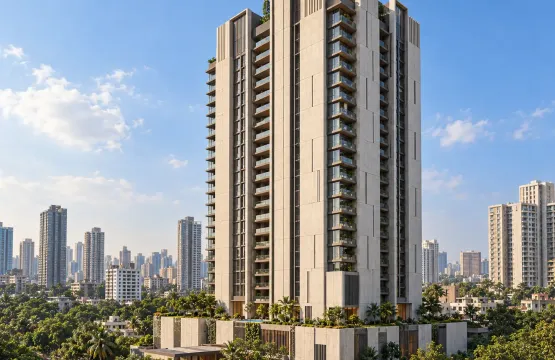
- Residential tower balcony railings - where residents evaluate the railing surface at daily close inspection range and where maintenance intervention is both expensive and disruptive in occupied buildings
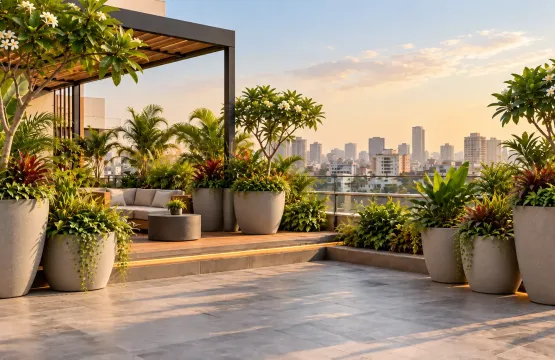
- Hotel and resort terrace and balcony railings - where guest experience includes the railing surface quality and where coastal locations create aggressive corrosion conditions for metal alternatives
- Commercial building terrace and corridor railings - where consistent appearance across multiple floors and low maintenance between facilities management visits are both operational requirements
- Staircase railings in premium residential and hospitality developments - where the railing is a feature interior and exterior architectural element evaluated at close inspection range by discerning residents and guests
- Coastal commercial and residential buildings - where the GRC railing's salt air resistance directly addresses the primary failure mode of metal railing systems in these environments
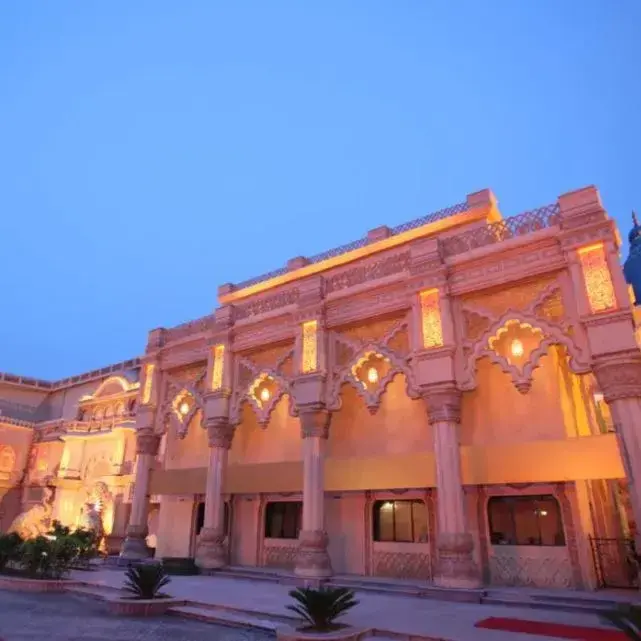
- Heritage and classical architecture influenced buildings - where custom GRC railing profiles carry the architectural character of the building into the railing detail in a way that standard metal or precast cannot
What Architects and Builders Need to Confirm Before Specifying GRC Railing
GRC railing specification on a modern building involves a set of technical decisions that need to be resolved before manufacturing begins. Confirming these early - at design development stage - avoids the coordination problems that arise when railing specification is left too late in the project programme.
- Profile and design - the railing profile is developed from the architect's drawings or design references. DECO produces profile drawings for architect approval before mould production begins
- Structural requirement - the applicable load standard for the building type and occupancy confirmed. DECO provides structural calculations for every GRC railing project
- Fixing system - connection to structural slab or wall confirmed with structural engineer. Cast-in fixing inserts are standard on DECO GRC railings
- Surface finish and color - finish direction confirmed and physical sample submitted for approval before full production
- Installation tolerance - dimensional tolerances between GRC railing elements and the structural substrate confirmed before production to avoid site fit problems
- Lead time - DECO's standard lead time for GRC railings is 8 to 10 weeks from profile approval and sample sign-off. Early engagement avoids programme pressure
Frequently Asked Questions - GRC Railing
Q1. Why is GRC better than steel or aluminium for railing on coastal buildings in India?
GRC railings contain no ferrous metal in the railing body - eliminating the primary failure mode of steel railings in coastal environments. Salt air, coastal moisture and high humidity have minimal effect on GRC material over its full-service life. DECO GRC railings use stainless steel fixing components as standard - eliminating corrosion at connection points in coastal conditions. Steel railings in coastal Indian cities typically show significant corrosion within three to five years. DECO GRC railings are designed for twenty-five years or more of coastal outdoor performance without the surface deterioration that affects metal systems.
Q2. Can DECO manufacture GRC railings in custom profiles for premium residential and hospitality projects?
Yes. DECO is a specialist GRC railing manufacturer offering fully custom profile development from the architect's drawings or design references. Classical baluster profiles, geometric patterns, contemporary minimalist rails, heritage-referencing designs and bespoke forms are all achievable in GRC. Profile drawings are submitted for architect approval before mould production. Physical sample railing elements are produced for design team and client approval before full production begins.
Q3. What structural standards do DECO GRC railings meet?
DECO GRC railings are manufactured to meet the structural performance requirements of IS 875 and NBC 2016 for balcony, terrace, corridor and staircase railing applications in India. Structural calculations confirming compliance with the applicable load requirements for the specific building type, occupancy and application are provided with every DECO GRC railing project. Fixing design is coordinated with the project's structural engineer.
Q4. How do DECO GRC railings perform in heavy monsoon conditions?
DECO GRC railings are manufactured for the full range of Indian outdoor conditions including heavy monsoon rainfall. The low porosity GRC surface does not absorb rainwater - it drains from the railing surface quickly without staining or biological growth accumulation. The alkali-resistant glass fibre reinforcement maintains structural integrity under repeated wet-dry cycling across multiple monsoon seasons. GRC's non-combustible character is unaffected by moisture exposure. Stainless steel fixing components prevent corrosion at connection points in high moisture conditions.
Q5. What is the lead time for DECO GRC railings on a commercial or residential project?
DECO's standard lead time for GRC railings is 8 to 10 weeks from final profile approval and sample sign-off. For large projects with phased delivery requirements - residential towers with multiple floors of balcony railing, large hospitality developments with extensive terrace and corridor railing - DECO programmes production in phases coordinated with the site's installation sequence. Early engagement at design development stage allows production to be programmed without creating programme pressure on the construction schedule.
The Railing That Works as Hard as the Building
The railing on a modern building is not a peripheral detail. It is a visible, touchable, weather-exposed architectural element that faces demanding conditions every day for the full life of the building. Specifying it in a material that will corrode, fade or require repeated maintenance intervention is a decision that creates problems for building owners, facilities teams and residents for decades.
GRC railing systems solve the railing specification problem directly. Corrosion-free performance in the outdoor conditions Indian buildings face. Custom profile capability that carries the building's architectural character into the railing detail. Surface quality that holds at close inspection range without maintenance overhead. And structural performance that meets Indian building code requirements as standard.
As a specialist GRC railing manufacturer, DECO works with architects, builders and developers on railing specifications across India - from individual residential tower projects to large hospitality and commercial developments. The right railing specification starts with understanding what the building and its users need the railing to deliver across its full life.