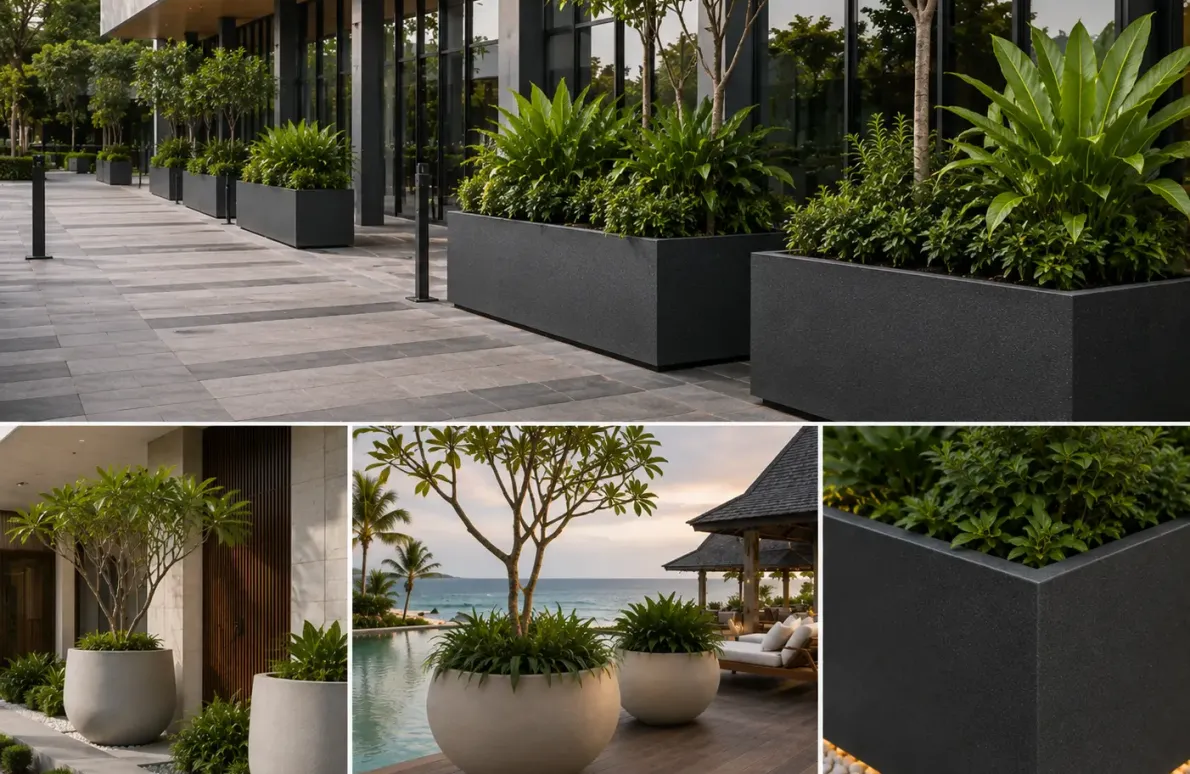
Not every project needs the same planter. A boutique villa garden, a 40-storey residential tower, and a beachfront resort all have completely different demands - different scales, different budgets, different structural constraints, and completely different guest or resident expectations. Yet a lot of planter specification still happens the same generic way, regardless of project type. FRP planters (fiberglass planters) are one of the few materials flexible enough to genuinely serve all three contexts well, but only if they're specified with the actual project type in mind.
Here's how FRP planters perform across commercial projects, residential developments, and resorts, and what matters most in each.
Why FRP Works Across Such Different Project Types
The reason FRP planters show up everywhere from office plazas to five-star resorts comes down to a combination of properties that few other materials offer together: they're lightweight, weather-resistant, corrosion-proof, and can be moulded into almost any form at a consistent finish quality across large quantities. That versatility is exactly what lets the same base material serve a minimalist corporate lobby and a lush resort courtyard equally well - the application changes, the underlying performance doesn't.
FRP Planters for Commercial Projects
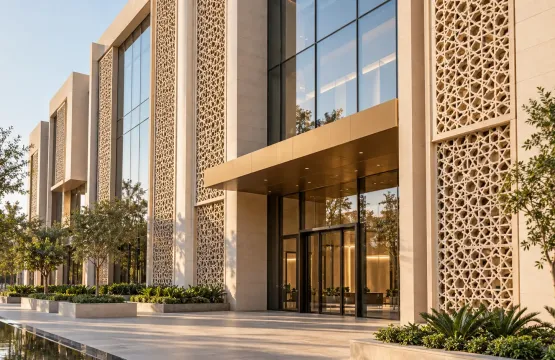
Commercial spaces - office campuses, retail plazas, business parks, mixed-use developments - put a specific set of pressures on planters that residential gardens rarely face.
High footfall and public exposure. Commercial landscaping gets touched, leaned on, and occasionally bumped by hundreds or thousands of people a day. FRP's impact resistance and lack of brittleness compared to terracotta or thin precast concrete makes it a more forgiving choice for planters positioned in high-traffic zones like entrances, plazas, and walkways.
Design consistency across large installations. Commercial projects often need dozens of matching planters across a façade line, a plaza, or an entrance sequence. Because FRP is mould-cast, every unit comes out dimensionally and visually consistent - critical for a corporate campus or retail development where mismatched planters undercut the polish of the whole space.
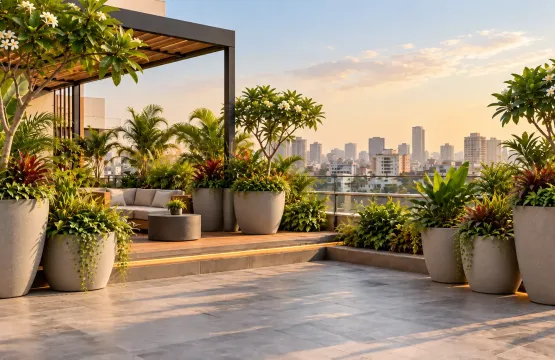
Structural load considerations on podiums and rooftops. A significant share of commercial landscaping now happens on podium decks, terraces, and rooftop amenity spaces rather than at grade. FRP's weight advantage over concrete or GRC directly reduces the load placed on structural slabs, which matters when a building's landscape team is working within a defined load budget set by the structural engineer.
Low ongoing maintenance for facilities teams. Commercial properties are typically maintained by a facilities team managing dozens of responsibilities, not a dedicated horticulture crew. FRP planters that don't need repainting, rust treatment, or crack repair reduce one more item on that team's list.
FRP Planters for Residential Developments
Residential projects - from individual villas to large-scale apartment complexes - bring a different set of priorities, centred more on aesthetics, amenity value, and long-term appearance for residents who see the same landscaping every day.
Balconies and terraces with real weight limits. Individual apartment balconies typically have modest load capacities, and residents want planting without worrying about structural safety. FRP's lightweight profile makes it possible to have substantial-looking, generously sized planters on a balcony without the load concerns that come with concrete or stone.
Clubhouse and amenity area design. Residential developments increasingly compete on amenity experience - the clubhouse courtyard, the pool deck, the entrance sequence - where planters function almost like furniture, shaping how inviting a space feels rather than just holding plants.
Consistent appearance across common areas. For gated communities and large residential complexes, planters at every building entrance, along every walkway, and around every amenity zone need to look coordinated. FRP's manufacturing consistency supports that uniform look across a development built and landscaped over multiple phases.
Durability that matches a resident's expectations over years, not months. Homeowners and residents notice degradation quickly - a cracked planter or peeling paint in a common area reflects poorly on the whole development. FRP's weather resistance and UV-stable finishes are built to hold up to that level of ongoing scrutiny.
FRP Planters for Big Resorts
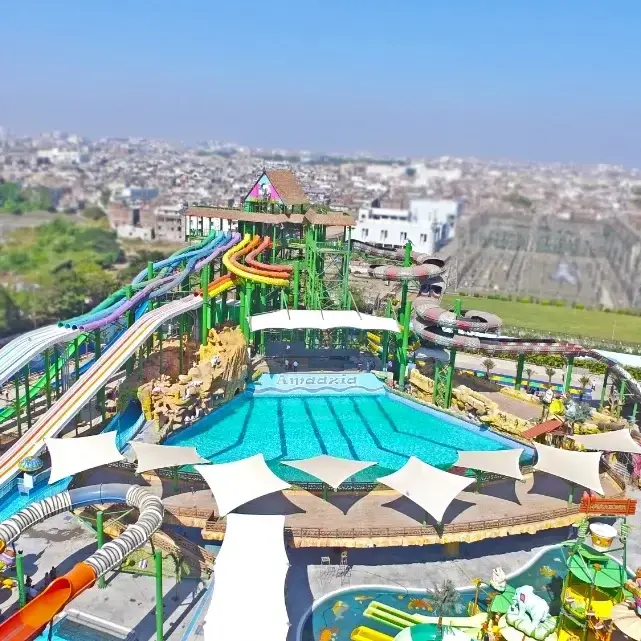
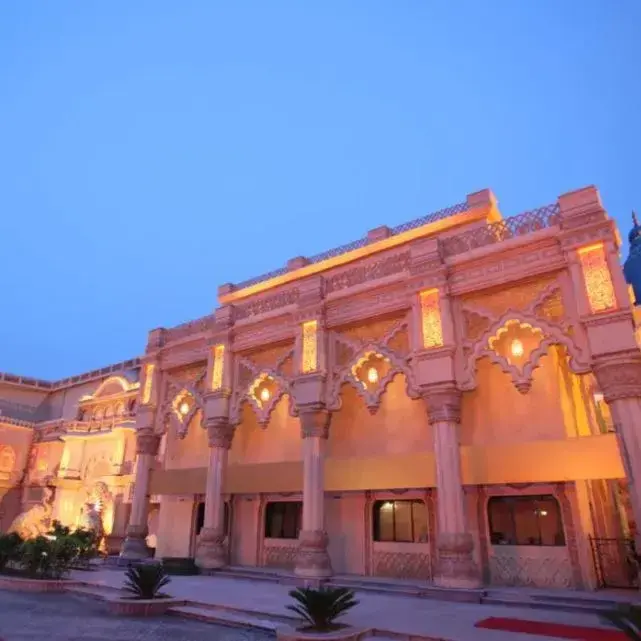
Resorts arguably ask the most of a planter, because in a resort setting, landscaping isn't just decoration - it's part of the guest experience and the brand impression from arrival to departure.
Guest-facing durability under constant exposure. Resort landscaping is typically exposed to sun, salt air (for coastal properties), pool chemicals, and near-constant foot traffic across poolside, lobby, and walkway zones. FRP's corrosion resistance and weather stability hold up to this combination better than most traditional materials, without visible wear showing up within the first year or two.
Scale and sculptural design ambition. Resorts often want planters that make a statement - oversized forms at an entrance, sculptural clusters around a pool deck, or planters that echo a resort's specific design theme. Because FRP can be moulded into virtually any shape, it supports exactly this kind of design ambition at a cost and weight that would be impractical in stone or precast concrete.
Ease of seasonal reconfiguration. Many resorts reconfigure outdoor spaces for events, weddings, and seasonal changes throughout the year. Lightweight FRP planters can be repositioned by a small team without heavy equipment, giving resort operations teams flexibility that heavier materials simply don't allow.
Consistent brand presentation across a large property. A resort property often spans a large footprint with multiple guest-facing zones - entrance, lobby, pool, restaurants, walkways - all of which benefit from a coordinated planter design language. FRP's manufacturing consistency makes it realistic to maintain that coordinated look across a sprawling property.
Frequently Asked Questions
Are FRP planters suitable for high-traffic commercial areas?
Yes. FRP's impact resistance and structural integrity make it well suited to commercial plazas, entrances, and walkways where planters are exposed to constant foot traffic and occasional contact, without the chipping or cracking risk associated with terracotta or thin precast concrete.
Can FRP planters handle rooftop or podium-level installations on residential buildings?
Yes, and this is one of their strongest applications. FRP planters are significantly lighter than concrete or stone equivalents, which reduces the structural load on podium decks and rooftop terraces, making them a practical choice where load capacity is limited.
Do FRP planters hold up to coastal or poolside resort conditions?
Yes. FRP doesn't corrode, rust, or absorb moisture the way metal or untreated concrete can, which makes it well suited to coastal resorts and poolside zones exposed to salt air, humidity, and pool chemicals.
Can FRP planters be customised to match a resort or development's design theme?
Yes. Because FRP is moulded rather than carved or cast in fixed forms, it can be produced in custom shapes, sizes, and finishes to match a specific architectural or thematic design language, and reproduced consistently across large quantities.
Are FRP planters cost-effective for large-scale projects needing many units?
Generally, yes. Because FRP is mould-cast, unit costs become more efficient at scale, and the material's durability reduces the replacement and maintenance costs that add up over time with less durable alternatives on large properties.
The Bottom Line
The right planter for a commercial plaza isn't necessarily the right planter for a resort pool deck or a residential balcony, even though all three might reasonably specify FRP. What changes is the priority - impact resistance and consistency for commercial projects, weight and aesthetic coordination for residential developments, and scale, design ambition, and guest-facing durability for resorts. FRP's underlying versatility is what makes it capable of meeting all three briefs, as long as it's specified with the actual project in mind rather than treated as a one-size-fits-all product.
DECO, from The Global Elephant, manufactures FRP planters for commercial developments, residential projects, and large-scale resorts across India, with custom sizing and finishes matched to each project type.
To explore DECO's planter range, visit DECO Planters by The Global Elephant.