Ask an architect what frustrates them most about specifying concrete and the answer is rarely strength or cost, it's usually geometry. Standard precast concrete has a way of flattening ambitious design intent into blocky, repetitive modules, because the material simply can't hold fine detail, sharp edges, or complex curvature without becoming impractically thick and heavy. UHPC has quietly removed that constraint, and architects working with it are discovering that "custom" no longer means "compromise."
Why UHPC Unlocks Design Freedom Other Materials Can't
Standard concrete's design limitations come down to a structural trade-off: achieving strength and rigidity typically requires bulk, thick sections, generous reinforcement cover, and simplified geometry that's easier to cast and less likely to crack. Fine detail, sharp corners, deep relief, or slender profiles tend to be exactly the features that compromise structural integrity in a conventional mix.
UHPC's dense, fibre-reinforced matrix changes that equation. Because the material achieves such high compressive and flexural strength at a much finer grain structure than standard concrete, it can be cast into extremely thin, sharply detailed, and geometrically complex forms without the structural penalties that would apply to ordinary precast. This is the material property that underlies everything architects are now doing with custom UHPC panels, from sweeping curves to razor-sharp Art Deco lines to deep sculptural relief.
Shapes: Beyond the Flat Panel
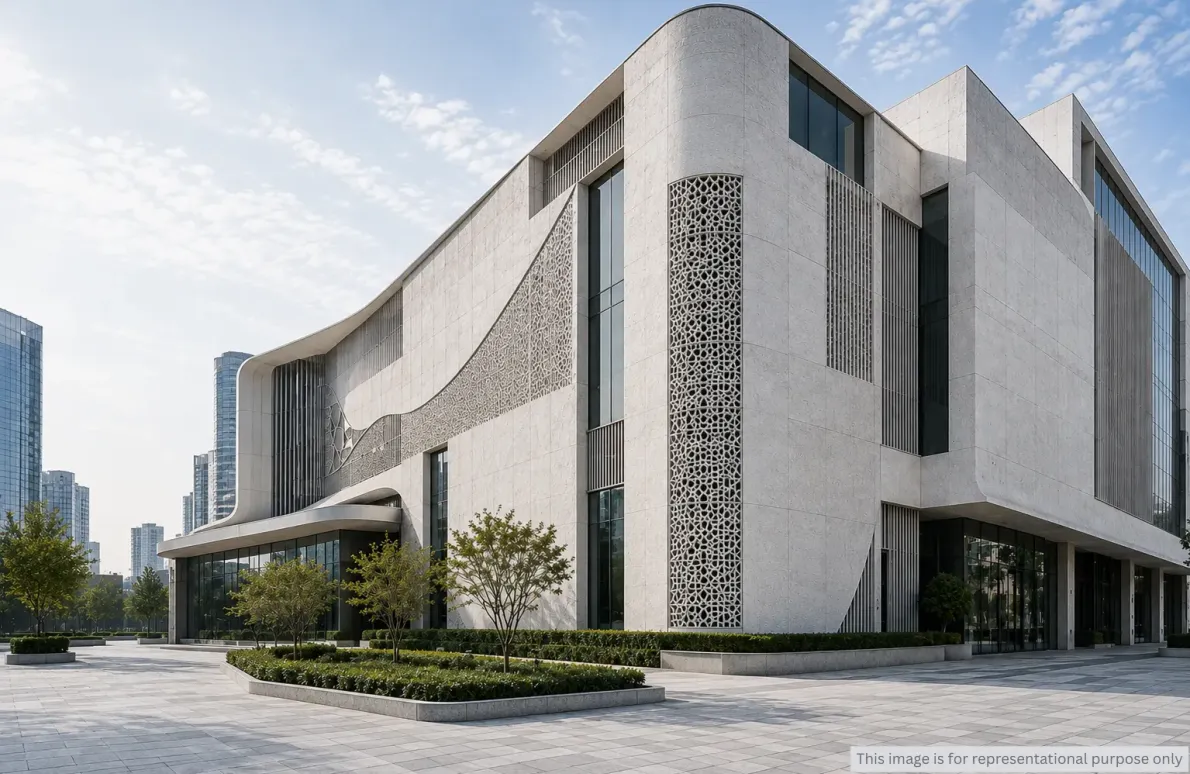
Complex curvature at building scale. UHPC's mould-casting process allows genuinely three-dimensional, curved facade forms, undulating surfaces, parametric geometries, sweeping bay forms, that would require enormously expensive formwork and structural reinforcement in conventional concrete. Because each panel is cast in a custom mould, curvature can vary across a facade without a corresponding jump in cost the way custom steel or glass curtain wall curvature typically demands.
Sharp, precise geometric detailing. For architects working in a more minimalist or Art Deco-influenced language, UHPC holds crisp reveals, fine grooves, and razor-edge lines with a precision that reads as genuinely crafted rather than simply cast. This level of edge definition is difficult to achieve consistently in standard concrete, where slightly softer, less defined edges are typical.
Deep relief and sculptural surface treatment. Beyond flat or gently curved panels, UHPC supports genuine three-dimensional surface relief, deep grooves, protruding ribs, faceted or origami-like folded geometries, that give a facade real depth and shadow play across the day without the weight penalty that equivalent relief in precast concrete would carry.
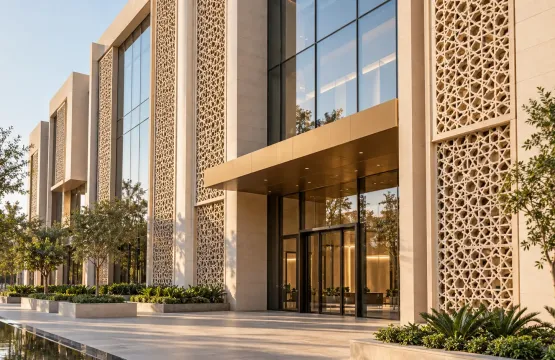
Perforated and fretwork patterns. The same material properties that allow fine detail in solid panels also support intricate perforated and fretwork geometries, useful where a project wants a UHPC panel that functions partly as a screening or shading element rather than a purely solid surface.
Colors: Beyond Grey Concrete
Integrated pigmentation. Color in UHPC panels is typically achieved by integrating pigment directly into the mix rather than applying it as a surface coating, which means the color runs through the material rather than sitting on top of it. This avoids the fading, chipping, and patchy wear that painted finishes eventually show, since even minor surface abrasion doesn't expose a different-colored substrate underneath.
A genuinely wide palette. Modern UHPC pigmentation systems support a broad range of colors, from warm earth tones that echo traditional stone and terracotta to bold, saturated contemporary colors for brands and developments that want a facade to make a clear visual statement. This gives architects a palette that goes well beyond the muted greys most people associate with concrete construction.
Consistent color across large production runs. Factory-controlled batching means pigment ratios stay consistent across large numbers of panels, which matters significantly on projects requiring hundreds of matching units across a building's elevation, a much harder consistency to achieve with site-applied surface coatings.
Textures: Replicating Materials Without Their Drawbacks
Stone, wood, and metal replication. One of UHPC's more striking capabilities is its ability to replicate the surface texture of other materials, natural stone grain, timber board-form patterns, brushed or hammered metal finishes, through detailed mould surface treatment, while retaining UHPC's own structural and weathering advantages. This lets architects achieve the visual character of expensive or high-maintenance materials at UHPC's weight, durability, and cost profile.
Smooth, matte, and mineral finishes. For more contemporary design languages, UHPC panels can be finished with a range of smooth, satin, or matte mineral surface treatments, giving a refined, tactile quality that reads as considered rather than generic precast.
Custom surface patterning. Beyond material replication, custom textures, fluted, ribbed, faceted, or entirely bespoke surface patterns, can be developed to match a specific architectural language or brand identity, reproduced identically across every panel in a project through the mould-based manufacturing process.
What This Design Freedom Actually Enables on Real Projects
Signature entry portals and monumental frames. Where a building's design concept calls for a genuinely distinctive, non-repeating architectural moment, an entrance portal, a monumental frame, a sculptural canopy, custom UHPC panels let that vision be realised in a durable, weatherproof material rather than being value-engineered down to a simpler, flatter form during construction.
Branded and identity-driven facades. Retail, hospitality, and corporate projects increasingly want a facade that functions as a recognisable brand asset. Custom UHPC shape, color, and texture combinations make it possible to encode a specific visual identity directly into the building envelope, rather than relying purely on applied signage.
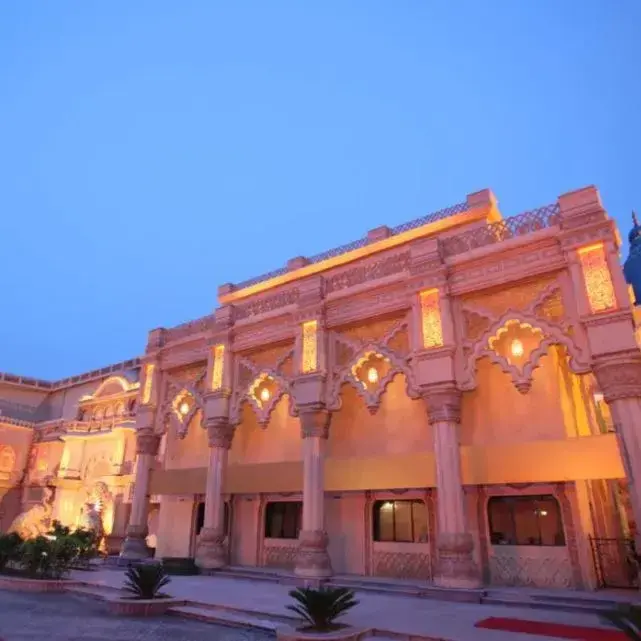
Heritage-referencing contemporary buildings. Projects that want to reference traditional architectural vocabulary, jali patterns, classical detailing, regional stone textures, without literally using the original heavy materials, can achieve that visual language in UHPC at a fraction of the weight and structural demand.
Landmark and cultural buildings. Museums, cultural centres, and civic buildings that lean on bold, sculptural facade design as a core part of their architectural identity benefit directly from UHPC's ability to hold complex custom geometry across large surfaces without the structural compromises conventional concrete would impose.
What to Discuss With Your Manufacturer Before Finalising a Custom Design
Mould development timelines and cost. Highly custom geometry requires bespoke mould fabrication, which affects both lead time and cost compared to standard panel profiles. Discussing this early in design development avoids surprises at the specification stage.
Repeatability versus true one-off elements. Understanding which parts of a design genuinely need to be unique versus which can use a repeatable module helps balance design ambition against project budget and timeline realistically.
Sample review before full production. Because color, texture, and fine geometric detail are difficult to fully judge from a rendering, requesting physical sample panels before committing to full production is worth the extra step, particularly for pigmented or textured finishes where lighting conditions can change how a color or texture reads on the actual building.
Structural coordination for complex geometry. Genuinely three-dimensional or deeply relieved panel forms may need specific structural and fixing detailing beyond a standard flat-panel fixing system, which should be resolved with the manufacturer's engineering team during design development, not after panels are already in production.
The Bottom Line
Concrete used to mean choosing between structural performance and design ambition. UHPC has largely erased that trade-off, giving architects genuine freedom in shape, color, and texture without sacrificing the strength, durability, and weather resistance the material is chosen for in the first place. For projects where the facade needs to say something distinctive, not just perform structurally, that combination is what makes UHPC increasingly the material of choice.
DECO, from The Global Elephant, manufactures custom UHPC facade panels in a wide range of shapes, colors, and textures, working with architects from concept design through mould development and installation.
To explore DECO's UHPC panel capabilities and finishes, visit DECO Panels by The Global Elephant.