Jali Screens for Sun Shading - How Architects Are Reducing Heat Gain on Commercial Buildings
India has one of the most challenging solar climates in the world for commercial buildings. A west facing glass facade in Mumbai or Chennai can receive intense afternoon sun for six to eight hours a day. Without a proper shading strategy, the building's cooling system works overtime, energy costs rise and occupant comfort suffers. One of the most effective and visually compelling answers to this problem is the Jali screen - and the material it is made from has changed significantly.
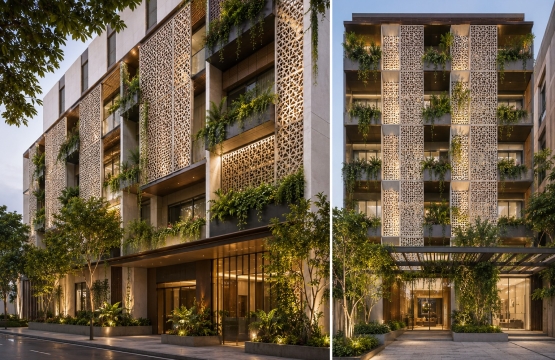
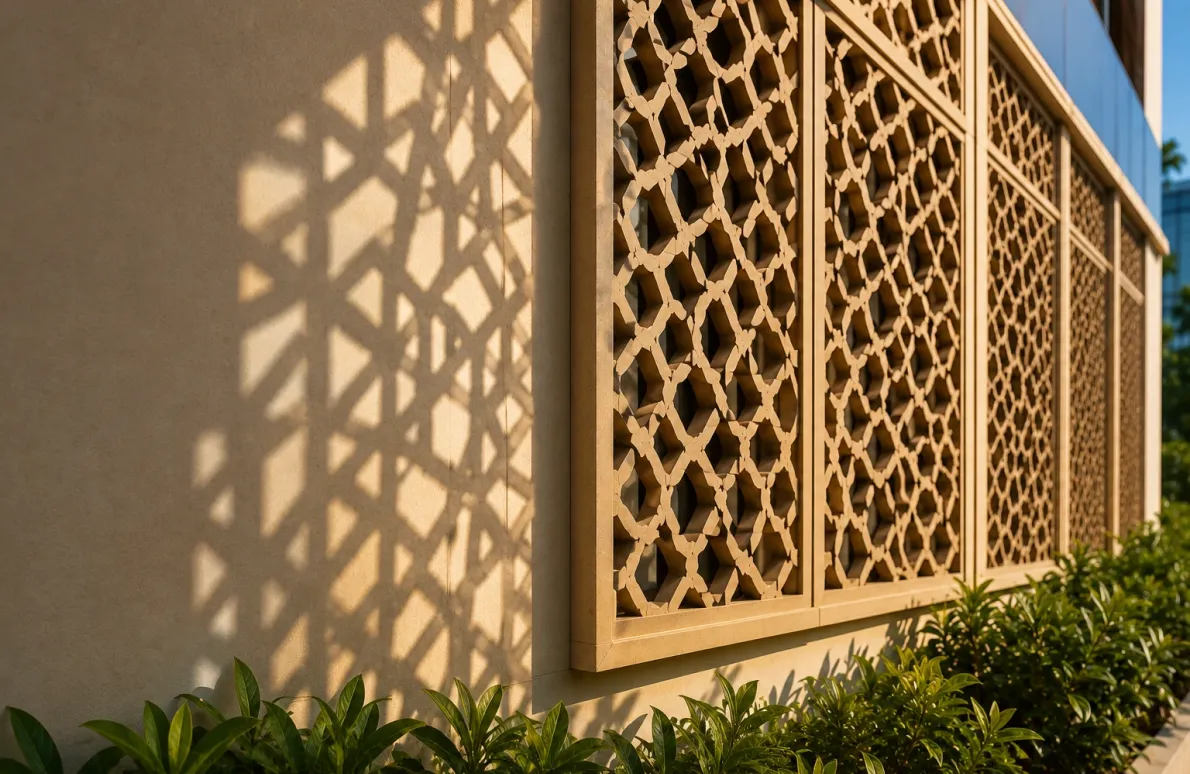
The Jali is not a new idea. Perforated screens have been part of Indian architecture for centuries - filtering harsh sunlight, allowing natural ventilation and creating privacy without completely closing off a space. What has changed is the material and the scale at which Jali screens can now be applied on commercial buildings.
At DECO we manufacture GRC Jali and FRP Jali screens for commercial building facades across India. This guide explains how architects are using Jali screens as a passive shading strategy - and what makes GRC and FRP the right material choices for this application.
Why Sun Shading Matters More Than Ever on Indian Commercial Buildings
The energy performance of a commercial building in India is directly linked to how well its facade manages solar heat gain. A building with poor facade shading forces its mechanical cooling system to compensate - driving up electricity consumption, increasing carbon emissions and raising operating costs year on year.
The Jali screen delivers both. A well designed GRC Jali or FRP Jali screen on a commercial facade can reduce direct solar radiation on the primary building envelope by 40 to 60 percent - depending on the openness ratio of the pattern and the orientation of the facade. That reduction directly lowers the cooling load on the building and reduces the energy consumption of the mechanical systems behind it.
GRC Jali for Commercial Sun Shading - Why Architects Specify It
GRC Jali - Glass Reinforced Concrete Jali - has become the most widely specified Jali screen material for commercial building facades in India. The reason is a combination of material properties that make it genuinely suited to large scale exterior sun shading applications.
Pattern Precision and Openness Ratio Control
The effectiveness of a Jali screen as a sun shading device depends on its openness ratio - the proportion of the panel that is open versus solid. A GRC Jali panel gives the architect precise control over this ratio through the mould design. DECO works with architects to develop GRC Jali patterns where the openness ratio is calculated to deliver the target shading coefficient for the specific facade orientation and climate zone.
Weather Performance on Exterior Facades
A sun shading Jali screen sits fully exposed to Indian outdoor conditions - monsoon rainfall, UV radiation, high humidity and in coastal cities, salt air. GRC handles all of these conditions reliably. The alkali-resistant glass fibres prevent the surface cracking and deterioration that affects standard concrete over time. DECO GRC Jali screens maintain their structural integrity and surface quality across Indian climate cycles without the maintenance burden that other materials create.
Weight and Structural Efficiency
A Jali screen covering a large commercial facade elevation accumulates significant area - and area means weight if the wrong material is specified. DECO GRC Jali panels weigh substantially less than precast concrete or stone equivalents for the same visual coverage. On tall commercial buildings where the Jali is supported on a secondary steel subframe, this weight reduction simplifies the subframe design and reduces the structural load transferred back to the primary building frame.
Design note: For west and south facing facades in Indian cities, an openness ratio of 35 to 50 percent in the GRC Jali pattern delivers meaningful solar shading while maintaining the visual lightness and ventilation performance that good Jali design achieves.
FRP Jali and Fiberglass Jali - Where They Add Value for Sun Shading
FRP Jali - Fibre Reinforced Polymer Jali, also called fiberglass Jali - brings a different set of properties to the sun shading conversation. Where GRC Jali is the standard choice for exterior commercial facade applications, FRP Jali and fiberglass Jali screens are the right answer for specific project situations.
FRP Jali is the lightest available option among manufactured Jali screen materials. For applications where structural load is tightly constrained - lightweight canopy structures, elevated sun shading fins, interior sun control screens in atriums - the weight advantage of FRP Jali makes it the practical specification. FRP is also completely corrosion resistant, making fiberglass Jali screens particularly well suited to coastal commercial buildings where salt air exposure would degrade other materials over time.
DECO manufactures FRP Jali screens in custom patterns and profiles for projects where weight or corrosion resistance is the primary specification driver. The manufacturing process allows complex geometries - curved screens, angled fins, non-planar shading elements - that integrate sun shading function with architectural expression.
How Architects Are Integrating Jali Screens Into Commercial Facade Design
The most effective commercial sun shading Jali installations are not added to a building as an afterthought. They are designed as part of the facade strategy from the beginning - with the pattern, the openness ratio, the orientation and the fixing system all coordinated with the building's energy model and structural design.
DECO works with architects at the design development stage on projects where Jali screens are part of the facade strategy. The typical integration process involves:
- Facade orientation analysis - identifying which elevations face the most aggressive solar angles and require the most shading
- Openness ratio calculation - determining the target proportion of open to solid in the Jali pattern based on the required shading coefficient
- Pattern development - designing a GRC Jali or FRP Jali pattern that delivers the target openness ratio while carrying the building's design language
- Subframe and fixing coordination - designing the secondary support system that carries the Jali screen load back to the primary structure
- Climate zone adaptation - adjusting pattern density and screen depth for the specific Indian climate zone of the project location
This integrated approach ensures the Jali screen delivers real performance - measurable reductions in solar heat gain - not just visual interest on the building exterior.
A Brief Note on UHPC Jali for Sun Shading
For landmark commercial buildings where the highest surface quality and finest pattern detail are required in the sun shading screen - DECO also manufactures Jali screens in UHPC. UHPC allows even finer pattern geometries in thinner sections than GRC - relevant for premium projects where the Jali screen is as much a design statement as a performance element. For standard commercial sun shading applications across India however, GRC Jali and FRP Jali deliver the right combination of performance, design flexibility and value.
Frequently Asked Questions
Q1. How much solar heat gain can a GRC Jali screen reduce on a commercial building facade?
A well designed DECO GRC Jali screen with an openness ratio of 35 to 50 percent can reduce direct solar radiation on the primary building envelope by 40 to 60 percent depending on facade orientation and pattern geometry. The exact reduction depends on the specific pattern design, the depth of the screen from the primary facade and the solar angles relevant to the building's location and orientation.
Q2. What is the difference between GRC Jali and FRP Jali for exterior sun shading applications?
GRC Jali is the standard specification for exterior commercial facade sun shading - offering reliable weather performance, precise pattern control and good structural efficiency. FRP Jali - also called fiberglass Jali - is lighter and fully corrosion resistant, making it the preferred choice for coastal buildings, lightweight canopy structures and applications where structural load is tightly constrained. DECO manufactures both and advises on the right specification for each project situation.
Q3. Can DECO manufacture GRC Jali screens in custom patterns for specific shading requirements?
Yes. DECO develops custom GRC Jali patterns from the architect's design intent - with the openness ratio calculated to meet the project's target shading coefficient. Pattern geometry, minimum section sizes between openings and overall panel dimensions are all developed in coordination with the design team. DECO produces a physical sample panel for approval before full production.
Q4. Are DECO GRC Jali screens suitable for coastal commercial buildings in India?
Yes. DECO GRC Jali screens are manufactured for Indian outdoor conditions including coastal salt air, monsoon rainfall and high UV exposure. Alkali-resistant glass fibres prevent surface deterioration over time and stainless steel fixings are used for all exterior installations to prevent corrosion staining. For extreme coastal exposure - seafront locations and island projects - DECO FRP Jali or fiberglass Jali screens provide additional corrosion resistance.
Q5. When should the Jali screen specification be confirmed in the design process?
Early - ideally at design development stage before structural drawings are finalised. The Jali screen fixing system needs to be integrated into the structural design, and the pattern openness ratio should be confirmed through the building's energy model before the facade design is locked. DECO engages with project teams at this early stage to ensure the Jali specification is properly coordinated with both the structural and energy performance requirements of the project.