Modern facade design is no longer limited to cladding, paint, glass or flat panels. A building exterior is expected to do much more than cover the structure. It must create identity, improve comfort, respond to climate, support privacy, define movement and add long-term architectural value.
This is why architects and developers are now looking at facade design beyond panels.
Panels are important, but they are only one part of the elevation. A truly strong facade is created when multiple architectural elements work together. GRC jalis, facade screens, planters, textured surfaces, railings, shading elements and landscape edges can come together to form one complete design language.
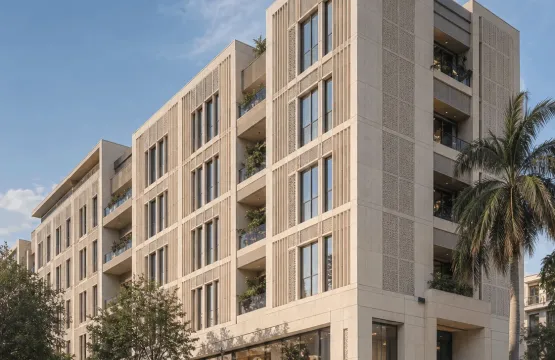
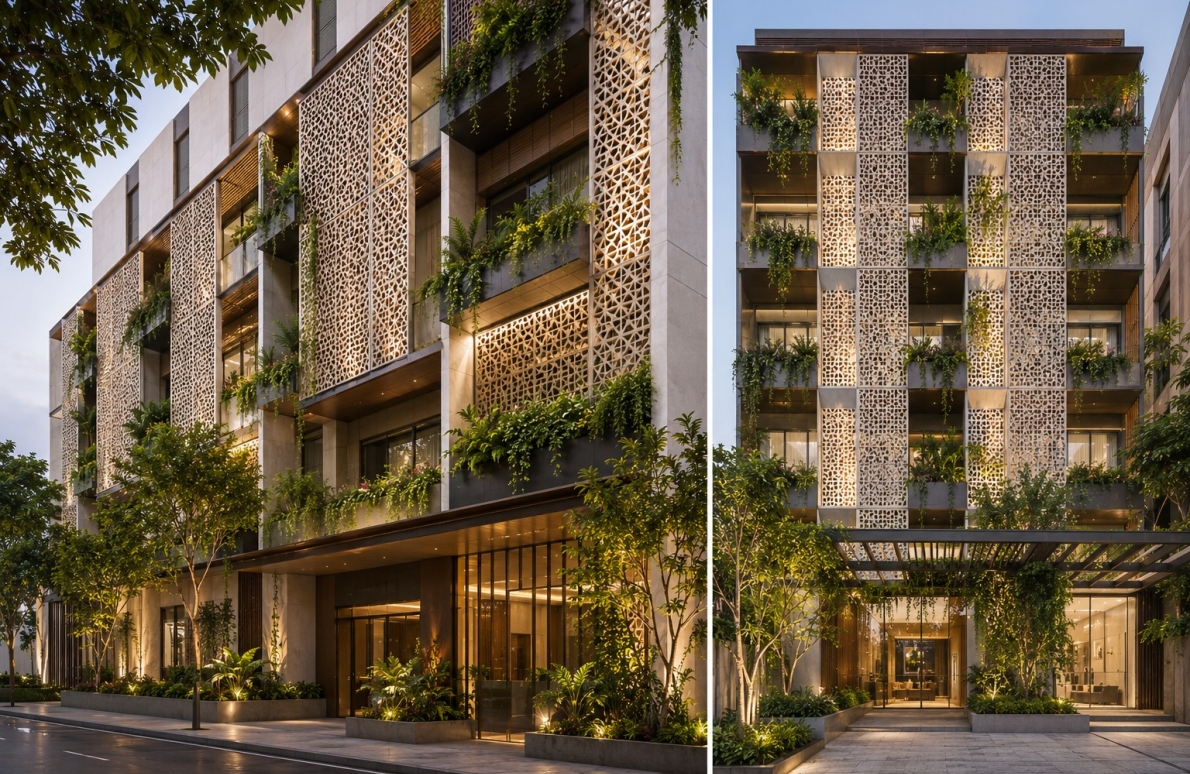
When jalis, screens and planters are planned as one system, the facade becomes layered, functional and memorable. It gains depth, rhythm, shadow, greenery and human connection. Instead of looking like a flat surface, the building begins to feel alive.
Why Facade Design Should Go Beyond Panels
Many buildings depend only on panels or cladding to create exterior appeal. While panels can add texture and pattern, they may not fully solve the needs of a modern building.
A facade often needs to address:
- Sunlight control
- Privacy
- Airflow
- Heat reduction
- Visual identity
- Green integration
- Entrance experience
- Human-scale design
- Long-term durability
- Project differentiation
Flat panels alone may not be enough for all these requirements. This is where jalis, screens and planters can add value.
A jali can filter light and provide privacy.
A screen can create depth and shade.
A planter can bring greenery and define space.
A panel can add texture and surface identity.
Together, these elements create a more complete facade system.
Facade as a Complete Architectural Language
A building façade should not feel like a collection of separate products. It should feel like one connected architectural language.
When each element is selected separately, the elevation can look cluttered or disconnected. But when jalis, screens, planters and panels are designed together, the building gains visual consistency.
For example, the same design rhythm used in a GRC jali can be repeated in balcony screens, entrance partitions or podium features. The texture of facade panels can be matched with GRC planters. The colour of planters can coordinate with the building elevation. The screen pattern can connect with the landscape design.
This creates a unified experience from the building facade to the ground-level landscape.
A strong facade is not only seen from a distance. It is also experienced at human level. People interact with entrances, walkways, podiums, balconies, outdoor seating areas and landscape zones. When all these elements are connected, the project feels more premium and thoughtfully designed.
Role of GRC Jalis in Facade Design
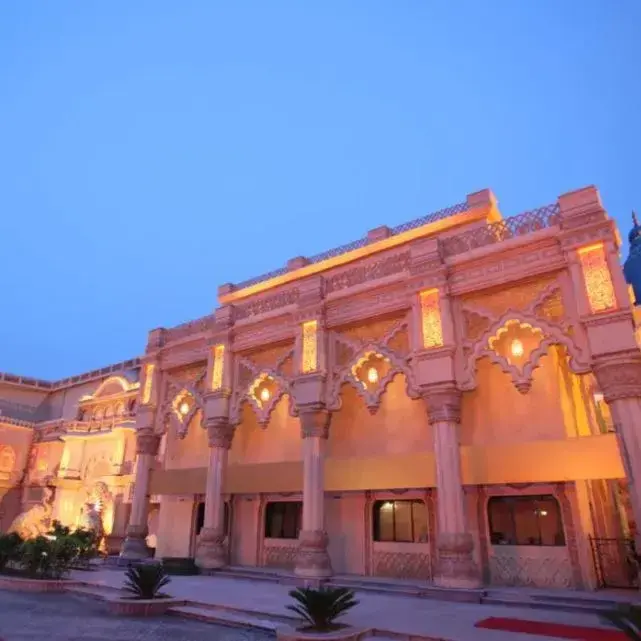
GRC jalis are one of the most effective elements for modern facade design. They add pattern, privacy, shade and identity to a building.
A jali screen is useful because it does not fully close the space. It creates a controlled layer between the inside and outside. It filters sunlight, allows airflow and provides visual separation.
In facade design, GRC jalis can be used for:
- Balcony screens
- Podium facades
- Hotel elevations
- Parking facades
- Commercial building screens
- Staircase and service area screening
- Entrance feature walls
- Terrace privacy screens
- Residential building elevations
The biggest advantage of jalis is that they combine function with expression. A jali can be minimal, geometric, traditional, bold or custom-designed according to the project concept.
For developers, this creates strong visual recall. For architects, it provides freedom to design an elevation that responds to both climate and identity.
Role of Facade Screens
Facade screens are broader architectural elements used to create shading, layering and visual depth. They may include jalis, perforated panels, patterned screens or custom exterior systems.
Screens can transform a plain building surface into a dynamic elevation. They create shadow movement, break the monotony of flat surfaces and give the building a more sculptural quality.
Facade screens are especially useful for:
- West-facing elevations
- Large commercial facades
- Parking structures
- Semi-open corridors
- Podium levels
- Service zones
- Hotel balconies
- Retail and mall exteriors
Screens also help hide functional areas without blocking ventilation. For example, a parking facade can look unfinished if left open. A custom screen can make it look premium while still allowing air movement.
When designed properly, screens become both practical and architectural.
Role of GRC Planters in Facade Experience
Planters are often treated as landscape elements, but they can play a major role in facade design.
A building does not end at the wall. The facade experience continues into entrances, podiums, terraces, walkways and outdoor seating areas. GRC planters help connect the building elevation with the landscape.
Architectural planters can be used to:
- Define entrance zones
- Create green edges around podiums
- Soften hard building surfaces
- Frame walkways and plazas
- Add greenery to terraces and balconies
- Improve outdoor seating areas
- Create human-scale comfort
- Support biophilic design
When planters are designed in the same material language as the facade, they look integrated rather than added later.
For example, a mall facade with GRC jalis can use large GRC planters at the entrance in matching finishes. A residential tower can combine balcony jalis with planter edges. A corporate campus can use facade screens and large planters to create shaded breakout zones.
This turns the facade into a complete spatial experience.
Combining Jalis, Screens and Planters
The real strength of modern facade design comes from combining elements thoughtfully.
- Jalis manage light, privacy and airflow.
- Screens create depth, shade and rhythm.
- Planters add greenery, softness and human connection.
- Panels provide surface texture and architectural clarity.
When used together, these elements can solve multiple design challenges.
Example 1: Commercial Building
A commercial building can use GRC jalis on the main facade to reduce direct sunlight and create identity. Facade screens can be used on service areas and staircases. Large GRC planters can define the entrance and outdoor waiting area.
The result is a building that looks complete from all angles.
Example 2: Premium Residential Project
A premium residence can use balcony jalis for privacy, facade screens for vertical design rhythm and planters on podium or terrace areas. This creates a lifestyle-driven elevation that feels green, private and premium.
Example 3: Mall or Retail Development
A mall can use large-format screens on the facade, GRC jalis around semi-open zones and planters to define plaza areas. This creates a stronger visitor experience and a more memorable exterior.
Example 4: Hotel or Resort
A hotel can use jalis for guest room privacy, screens for entrance drama and planters for arrival experience. Together, these elements create a facade that feels premium, comfortable and distinctive.
Creating Depth in Modern Facades
Depth is one of the most important qualities in facade design. A flat building surface can look plain even if expensive materials are used. Depth creates shadow, contrast and visual richness.
Jalis and screens naturally add depth because they sit as an additional layer over or in front of the building surface. Planters add depth at the ground and podium levels. Panels add surface variation and texture.
This layered approach makes the facade more interesting from different distances.
- From far away, the building has a strong shape and pattern.
- From the street, the screens and planters create human-level detail.
- From inside, jalis create filtered light and privacy.
- At night, lighting can highlight patterns, textures and green areas.
This makes the facade more dynamic throughout the day.
Facade Design and Climate Response
A good facade should respond to climate. In India, buildings often need protection from harsh sunlight, heat and glare. Jalis and screens can help reduce direct sun exposure while still allowing natural light and air.
Planters can support outdoor comfort by adding greenery and softening hard surfaces. When used around entrances, walkways and podiums, they can make outdoor areas feel more pleasant.
Climate-responsive facade design does not mean the building has to look technical or industrial. It can be elegant, premium and expressive. GRC jalis and planters allow architects to combine performance with design.
Facade Design for Human Experience
Facade design is not only about how a building looks in photographs. It is also about how people experience the building.
A person walking toward a building notices the entrance, shade, greenery, seating, scale and surface details. If the facade is too flat or harsh, the experience can feel cold. If it includes layered screens, greenery and thoughtful edges, the building feels more welcoming.
Planters help at the human level. Jalis help at both human and building scale. Screens help create larger visual identity. Together, they shape how people feel around the building.
This is especially important for:
- Malls
- Hotels
- Residential projects
- Corporate campuses
- Retail streets
- Clubhouses
- Public plazas
- Mixed-use developments
In these projects, the facade must attract, guide and engage people.
Design Consistency Across the Project
One common mistake in building design is treating every exterior element separately. The facade may have one material, the planters another, the balcony screens another and the landscape another. This can make the project look visually disconnected.
An integrated approach solves this.
- The same finish palette can be used across jalis, planters and panels.
- The same geometric language can guide screens and landscape edges.
- The same material tone can connect facade and podium design.
- The same design rhythm can move from elevation to entrance.
- This creates a project that feels planned and premium.
Material Advantages of GRC for Integrated Facade Elements
GRC is suitable for integrated facade design because it can be used across multiple architectural elements.
It can be used for jalis, panels, screens, planters, furniture and decorative elements. This allows architects to maintain consistency across the project.
Key advantages include:
Design Flexibility
GRC can be moulded into different patterns, profiles and shapes. This makes it useful for custom jalis, panels and planters.
Finish Options
GRC can be developed in multiple surface finishes such as concrete grey, sandstone, terracotta, stone texture, off-white, pigmented and custom textures.
Durability
GRC is suitable for exterior architectural applications when properly designed and installed.
Project Customization
Every project can have a unique design language based on its architecture, location and audience.
Visual Integration
Using GRC across multiple elements helps create a consistent design identity.
Important Design Considerations
Before designing an integrated facade system with jalis, screens and planters, architects and developers should consider the following:
Orientation
Sun direction affects where screens and jalis should be used.
Privacy Requirement
Residential, hospitality and commercial spaces may need different levels of screening.
Opening Ratio
The jali or screen pattern should balance shade, light, airflow and visibility.
Structural Support
Panels, jalis and planters should be coordinated with the structural design.
Drainage
Planters must include proper drainage to avoid water-related issues.
Maintenance Access
All facade and landscape elements should be accessible for cleaning and upkeep.
Finish Coordination
Colours and textures should be selected together, not separately.
Scale
The size of jali patterns, screen modules and planters should suit the scale of the building.
Why Developers Should Consider Integrated Facade Design
For developers, the facade is a major part of project positioning. It affects how buyers, tenants, visitors and investors perceive the property.
An integrated facade using jalis, screens and planters can offer:
- Stronger project identity
- Better visual differentiation
- Premium exterior appeal
- Improved entrance experience
- Better outdoor usability
- More memorable marketing visuals
- Long-term design value
In competitive real estate, the facade can become a strong selling point. A project with a distinctive and well-integrated exterior is easier to remember and position.
Why Architects Prefer System-Based Facade Thinking
For architects, system-based facade design offers more control. Instead of adding separate products at different stages, the facade is planned as a complete composition.
This allows better coordination between:
- Architecture
- Landscape
- Facade engineering
- Material selection
- Lighting
- Structural support
- User experience
The result is more refined and more intentional.
Final Thoughts
Modern facade design needs to go beyond panels. Panels add surface value, but a complete facade requires layers, shade, privacy, greenery and human connection.
GRC jalis, architectural screens and planters can work together to create facades that are functional, expressive and climate-responsive. They help buildings manage sunlight, improve privacy, add depth, soften hard surfaces and create a strong identity.
For hotels, malls, premium residences, corporate campuses and commercial projects, this integrated approach can transform the entire exterior experience.
A facade should not feel like a flat covering.
It should feel like a complete architectural system.
When jalis, screens and planters are designed together, the building gains more than beauty. It gains rhythm, comfort, identity and long-term value.