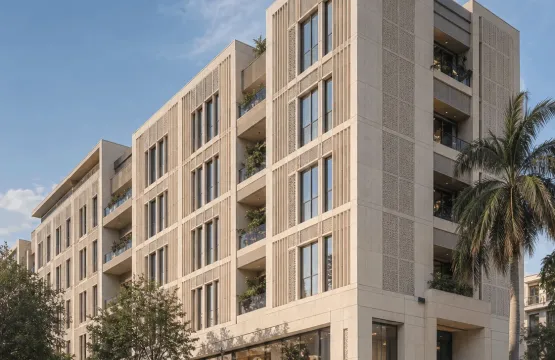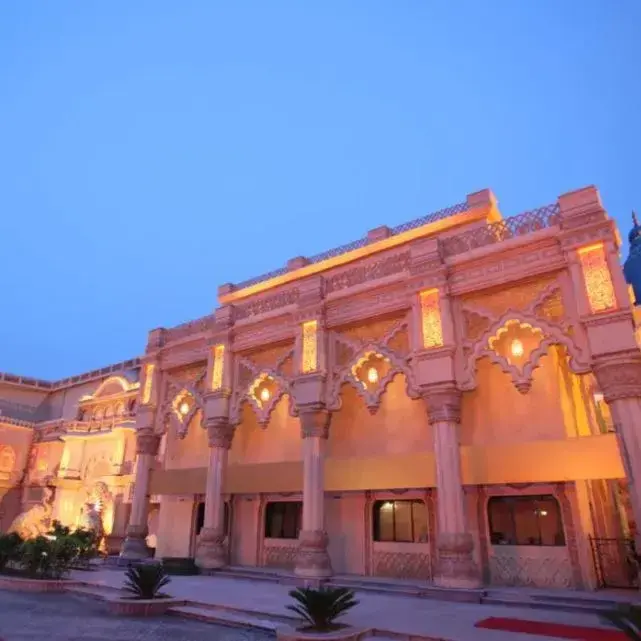
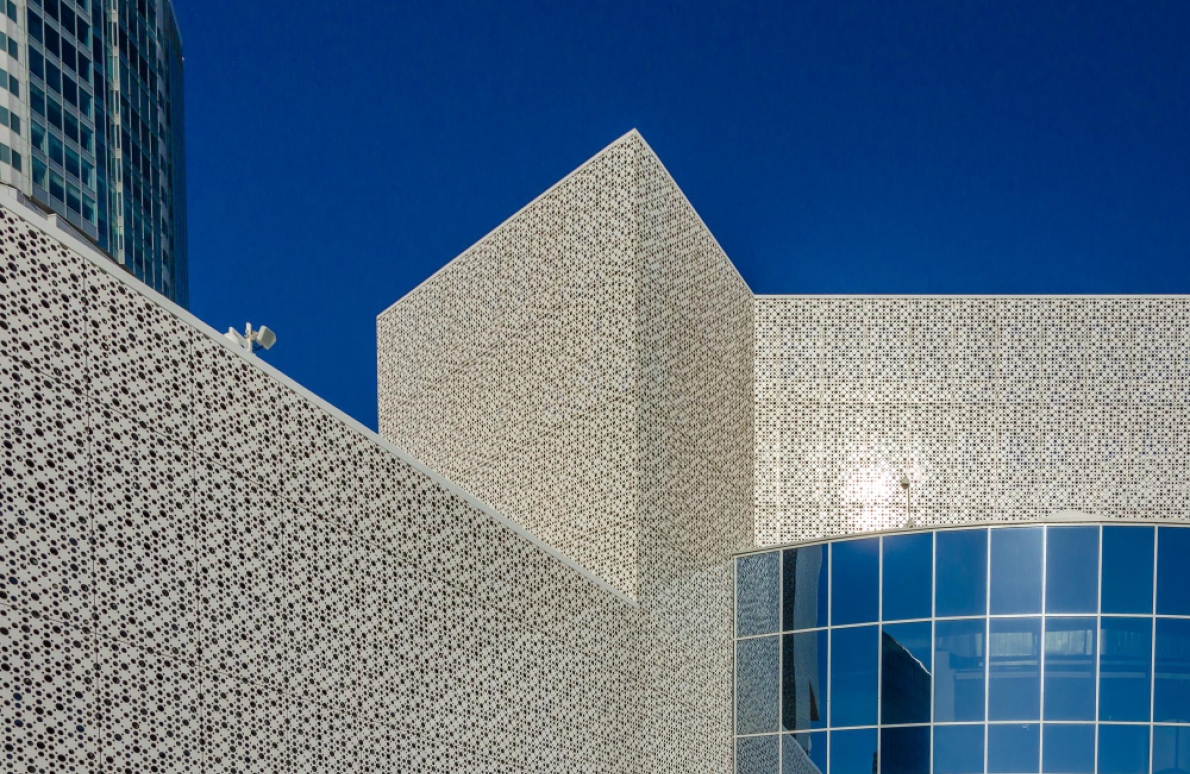
A ventilated façade is not merely a cladding method - it is an envelope strategy.
By introducing a controlled cavity behind the outer skin, the system enhances thermal stability, manages moisture migration, and protects the structural wall assembly from long-term distress. When executed with GRC (Glass Reinforced Concrete) or UHPC (Ultra-High Performance Concrete) panels, it delivers an elevation that appears monolithic - yet performs with engineered intelligence.
This guide outlines both the performance advantages and the detailing discipline required for success.
What Is a Ventilated Façade?
A ventilated façade - often referred to as a rainscreen system - consists of:
- A cladding layer (GRC or UHPC panels)
- A structural subframe system
- A continuous air cavity behind the panels
- Controlled ventilation and drainage pathways
- Optional external insulation
The outer skin resists the majority of wind and rain exposure. Any incidental water penetration is managed within the cavity through drainage and pressure equalization, protecting the primary wall assembly behind.
The principle is simple. The performance outcome, however, depends entirely on detailing precision.
Why Architects and Developers Choose Ventilated Systems
Superior Moisture Management
Water entering panel joints does not become trapped within the wall assembly. Instead, it drains safely through designated weep paths, significantly reducing the risk of dampness, staining, and substrate degradation.
Improved Thermal Performance
When paired with continuous insulation, ventilated façades reduce heat gain and mitigate thermal bridging. This is particularly valuable in hot and humid climates where envelope performance directly impacts operational energy loads.
Reduced Façade Distress
A ventilated cavity allows the system to dry efficiently. This minimizes efflorescence, staining, and long-term surface deterioration - preserving visual clarity over time.
Longevity and Serviceability
Panelized systems allow selective replacement without disturbing the entire elevation. For commercial and residential projects designed for long life cycles, this adaptability is a critical advantage.
Why GRC and UHPC Excel in Ventilated Assemblies
Both materials are exceptionally suited to rainscreen logic - yet they serve different architectural intentions.
GRC offers:
- Design versatility (ribs, flutes, patterns, moulded geometries)
- Lightweight panel solutions
- Expressive façade articulation
UHPC offers:
- High compressive and flexural strength
- Thin, refined panel profiles
- Crisp edges and precision grooves
- Exceptional resistance in high-impact zones
Together, they allow architects to balance sculptural ambition with structural discipline.
Detailing Fundamentals: Where Performance Is Defined
A ventilated façade does not succeed by material choice alone. It succeeds through detailing rigor.
1) Substructure Strategy
The support framework (GI, MS, or aluminum) must be selected based on:
- Corrosion classification (coastal vs. inland environments)
- Structural loading (wind, seismic, dead load)
- Compatibility with anchors and bracket systems
- Long-term access and maintenance strategy
Improper substructure specification undermines the entire system.
2) Brackets and Rail Systems
A well-engineered fixing system must provide:
- Three-dimensional adjustability (plumb and level control)
- Allowance for thermal and structural movement
- Secure anchorage into structural elements - not non-structural infill
- Clearly defined and traceable load paths
Movement accommodation is particularly critical. The structural frame and cladding layer will expand and contract differently. The façade must absorb this without stress concentration.
3) Cavity Design and Drainage Logic
The cavity is not empty space - it is an active performance zone.
Detailing must ensure:
- Clear bottom drainage points (weep outlets)
- Continuous vertical airflow paths
- No internal ledges where water can collect
- Insect mesh where required without obstructing airflow
- Proper fire-stopping measures in compliance with local regulations
A ventilated façade performs only if water has a clear path to exit.
4) Joint Strategy
Joint design defines both aesthetic rhythm and technical integrity.
Key principles:
- Consistent joint widths across the elevation
- Intentional shadow gaps for visual clarity
- Sealant used selectively - not indiscriminately
- Early decision between open-joint vs. sealed-joint systems
Joint logic should be established during concept design — not resolved on site.
5) Corners, Parapets, and Terminations
Transitions are where envelope systems succeed or fail.
These zones require:
- Metal flashings where necessary
- Defined drip edges to prevent streaking
- Concealed returns to protect raw panel edges
- Accessible detailing for future maintenance
Corners are architectural moments. They must also be engineering solutions.
Strategic Use: UHPC vs GRC in a Single Façade
A hybrid strategy often delivers the most efficient outcome:
- Use UHPC at plinths, corners, and high-abuse zones where strength and impact resistance are critical.
- Use GRC across the primary façade field to achieve sculptural richness and cost balance.
This approach preserves budget discipline while maintaining a premium architectural expression.
Conclusion
In contemporary façade design, form and performance are inseparable.
A well-detailed ventilated system using GRC and UHPC panels allows architects to create expressive, monolithic elevations that remain breathable, durable, and serviceable over decades.
The material matters.
The detailing matters more.
True façade excellence lies in the union of art, engineering, and precision.
CTA:
DECO can support ventilated façade detailing-substructure intent, panel module strategy, typical sections, and on-site installation sequencing.